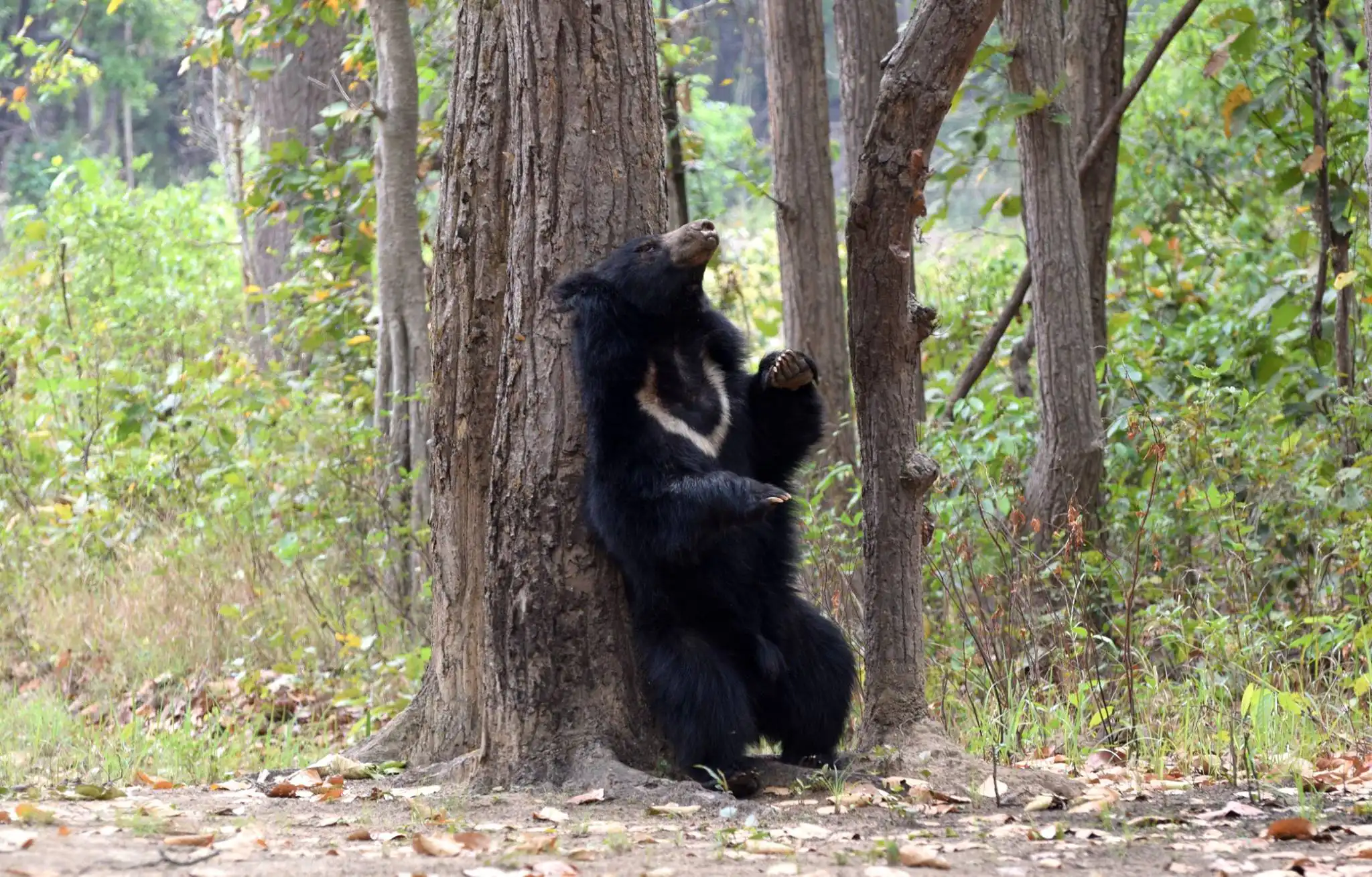
Sloth Bear: Securing food in Central India
(Melursus ursinus ursinus)
Sloth Bears have ill reputation among forest guards and naturalists. Nothing to do with its unkempt black coat and noisy behavior; however its sudden appearance and unpredictable attacks have been putting sloth bear as ‘more feared than Tigers’. While in Chitwan, one may encounter a Sloth Bear during nature walks. In India, our guests have safely watched them do their chores, from the comfort of the jeep. Sloth bears can be seen during day safaris in the thicks of Bandhavgarh, Satpura and Kanha National Parks of Central India. The activity is more in the late evenings and the night, but bears also come out during the day if the weather is under clouds or after rain.
Bears are fruit eating, insect eating and meat eating animals. They are omnivorous and pick a seasonal diet. Often they get intoxicated by overeating Mahua leaves and flowers during springs. They have been venerated with implements to reach, dig and rip away the food hubs!
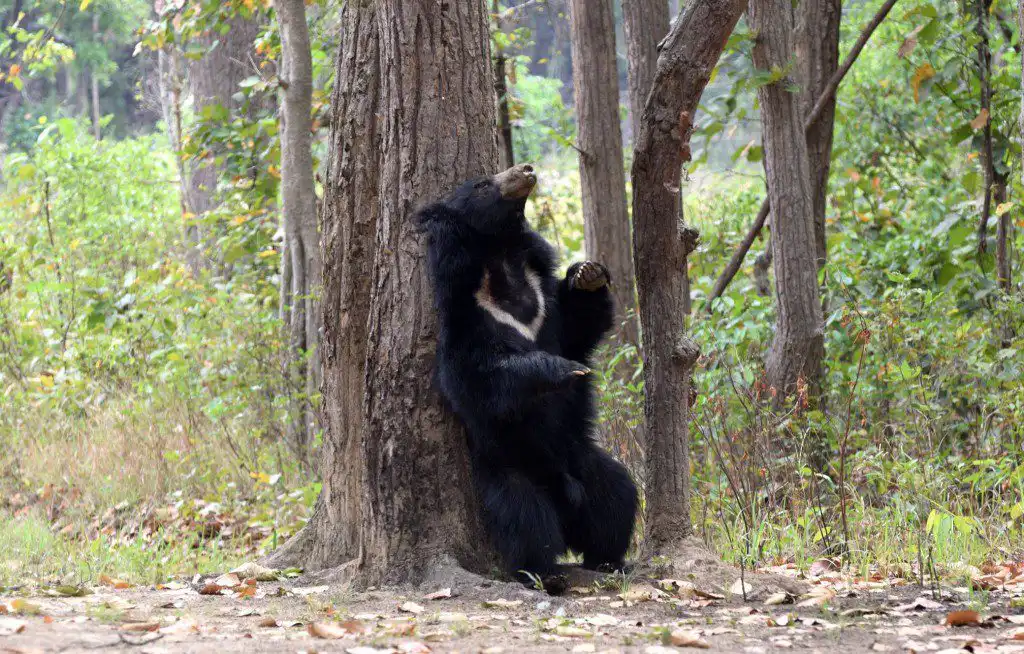
Out, when it’s pleasant:
A mother with cubs prefers to feed the family during daytime, to escape the nocturnal predators. This picture was taken in Kanha, on a clouded day. The V mark on chest is unique to sloth Bears.
1) Sniff-sniffing:
Bears can sniff for about a mile of area. They are short sighted and have inadequate hearing ability. This all gets hidden by an extremely efficient nose. Bears can close their nostrils at will. As per mammal standards, bears are considered to have primitive brains and sense of smell is the only developed feature. They are capable of finding out food both on and below surface.
2) Feeding by Suction:
The detached lips of the bear to suck up the termites from their mounds are a feature unique to the bears. The upper lip folds upwards to close the nostrils preventing any insects or dust to enter nose, whilst the bear is busy pumping out its diet from the deep termite mounds. Unlike other carnivore they are free from gum. Also, unlike Tigers the crowns of their teeth are concave to munch in the leaves and insects. Bears loose two of their incisors at an early age, the gap so formed assists in the sucking.
Spotted during Night Safari in Satpura: Sloth Bear has biggest of the ears among other species found in India. The picture clearly shows the elongated muzzle.
3) The ivory white claws of sloth bear :
The sloth bear possess un-retractable claw, the claws of the forefeet are bigger and are curved inside for specialized digging. The strength in the limbs, 3 inch long claws and broad feet provide the bear with enough hold when climbing up the trees. The claws are used to break open the termite mounds and honeycombs. Bears would climb trees to invade the hives and shake off the fruits. They descend down to eat.
4) The Unpredictable Bear:
The tigers, wild dogs, or even leopards don’t put bears on their wish list for food. Their sharp claws and unpredictable moves can be extremely lethal.
Courtesy : Vineeta Yadav

Pugdundee Safaris is recognized as one of India’s leading responsible safari companies. With seven intimate jungle lodges in Central India and many bespoke wilderness experiences it presents the very best of the Indian subcontinent wildlife & hospitality. Between 2009 and 2026, we have been awarded for our excellence in wildlife safaris, our commitment to sustainability, our experienced naturalists and our pioneering mobile safari initiative. Pugdundee is a Hindi word meaning a foot trail commonly used by humans and animals, this word is popularly used for such beaten paths in the Indian jungles. We continuously strive to deliver the best possible guest experience, while still integrating the conservation of jungles and the people living around. We are motivated by the hope of reaching out to people in the remotest areas of our country, as we believe that they are the front-runners of wildlife conservation. However, maybe just a drop in the ocean we consider that we are making a significant contribution to wildlife conservation and rural economy wherever our lodges are.