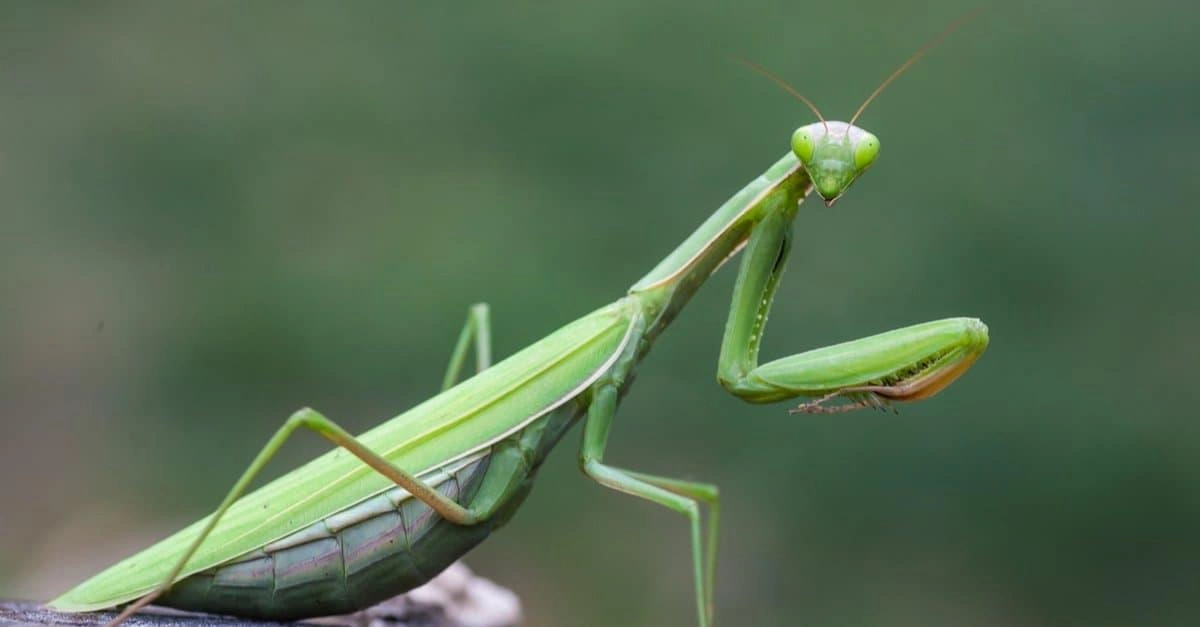
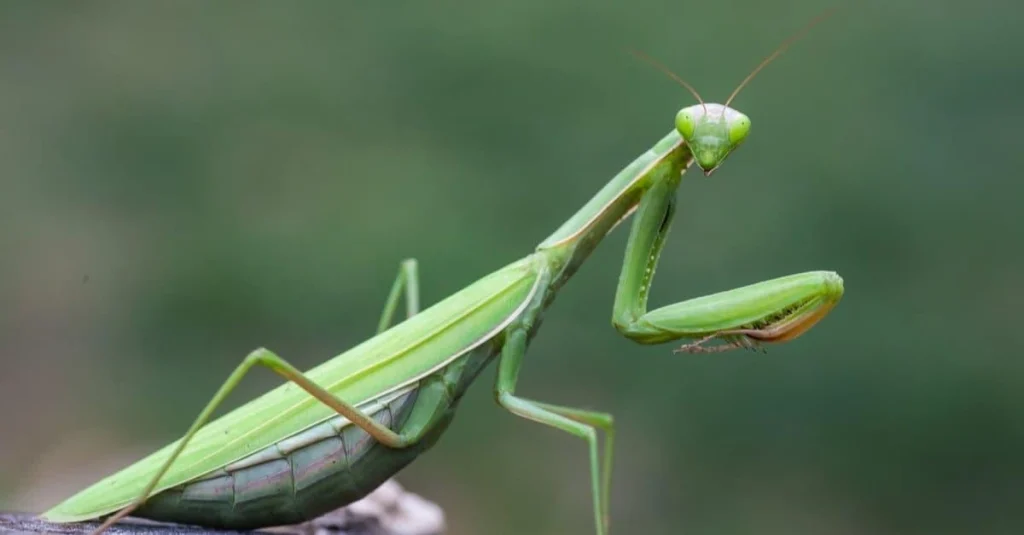
Praying Mantis in India

Praying Mantis in India: Facts, Life Cycle & Types

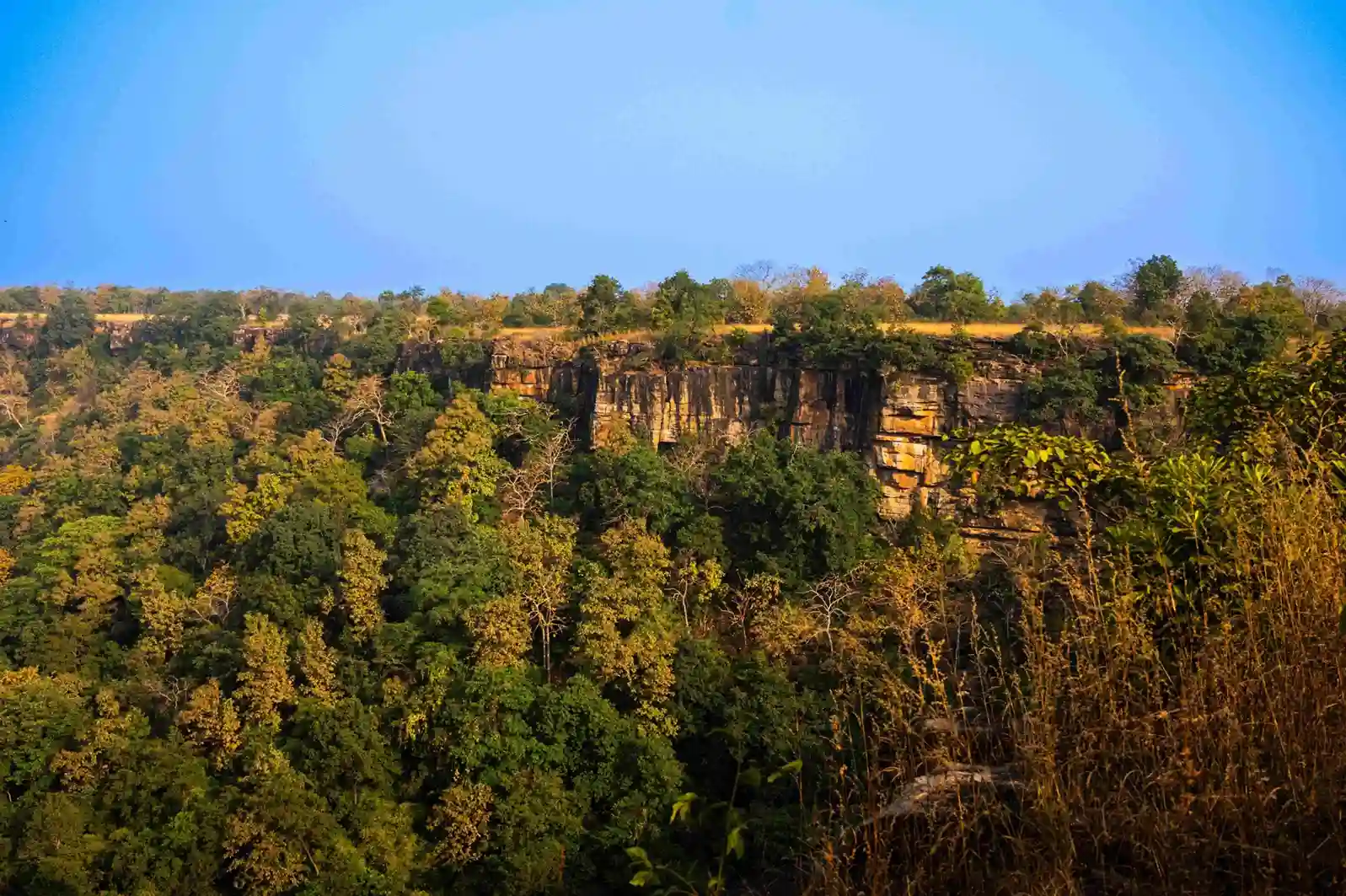
Monsoon in central Indian jungles is a magical experience. After two to three months of piercing heat, the first drop of rain brings excitement to all of us. 

Just like any of us there are thousands of other creatures expecting this sign of the first rainfall, the sign of monsoon. 

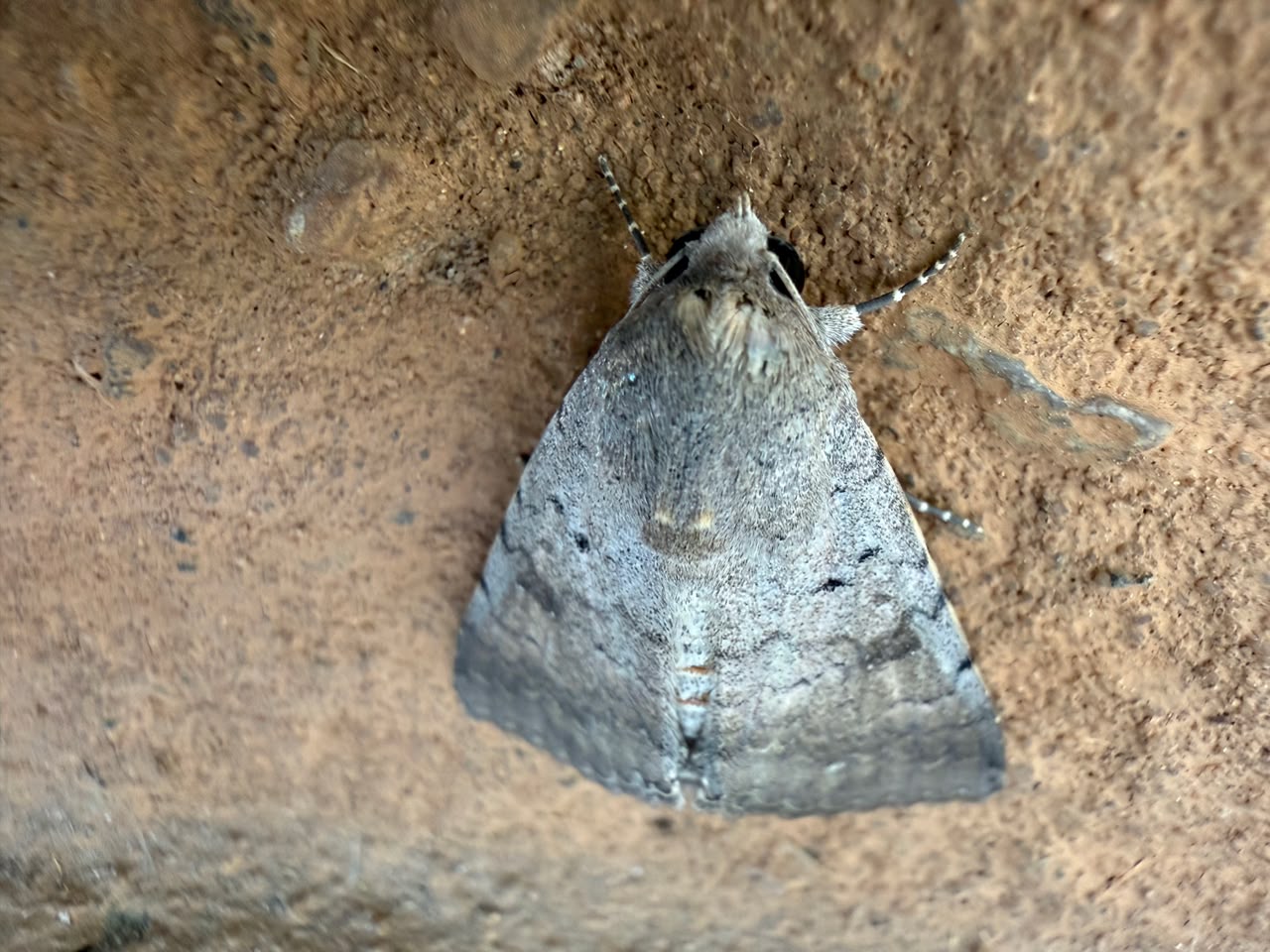
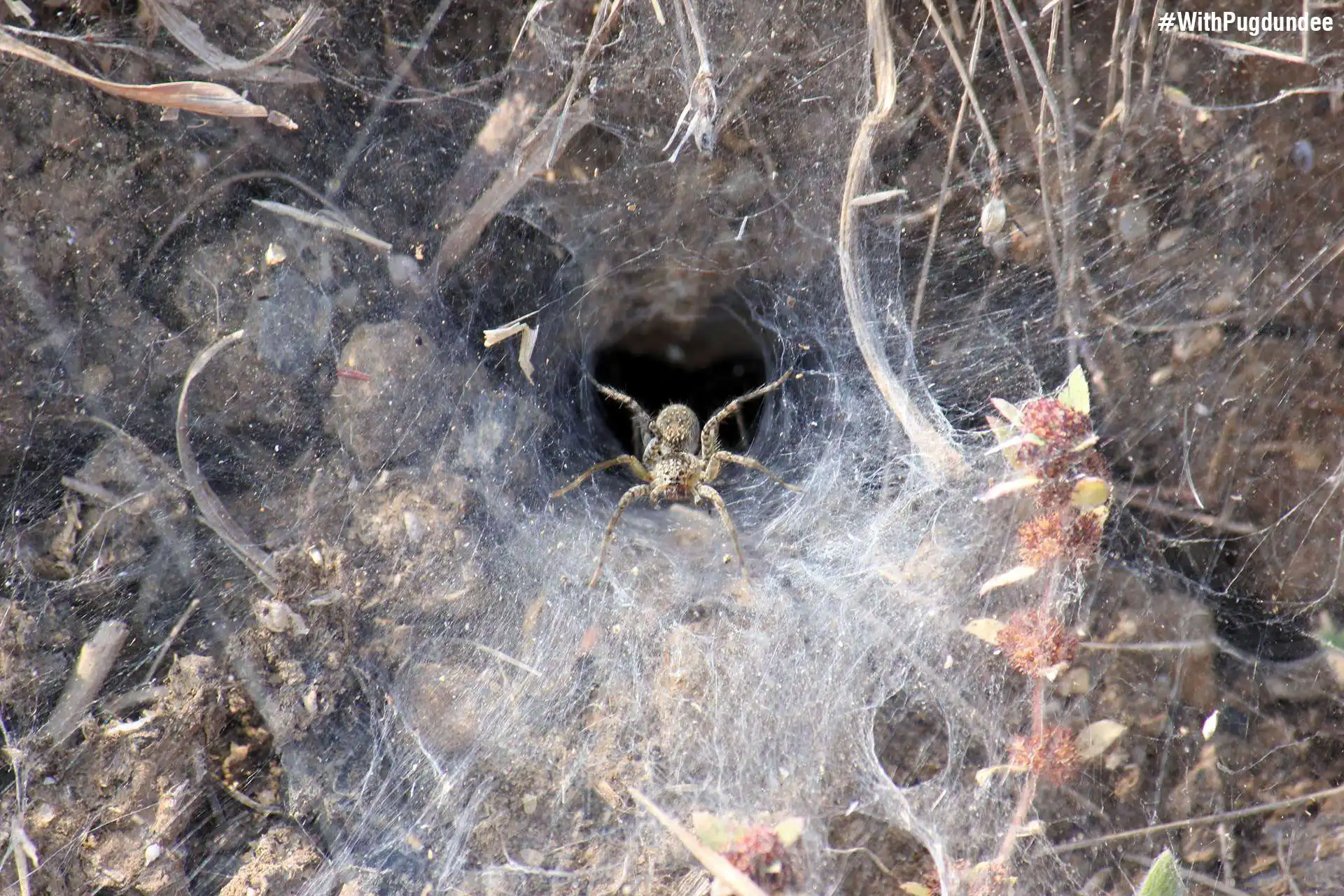
Thousands of other creatures….thousands!!?  Yes, you heard it right…. It’s the season for insects. Those nymphs that had spent the whole year underground come out and get into their adult stage. The adults become busy looking for mates, building nests and laying eggs paving the way for the new generation. Yes, it’s their time to begin a brand new story.

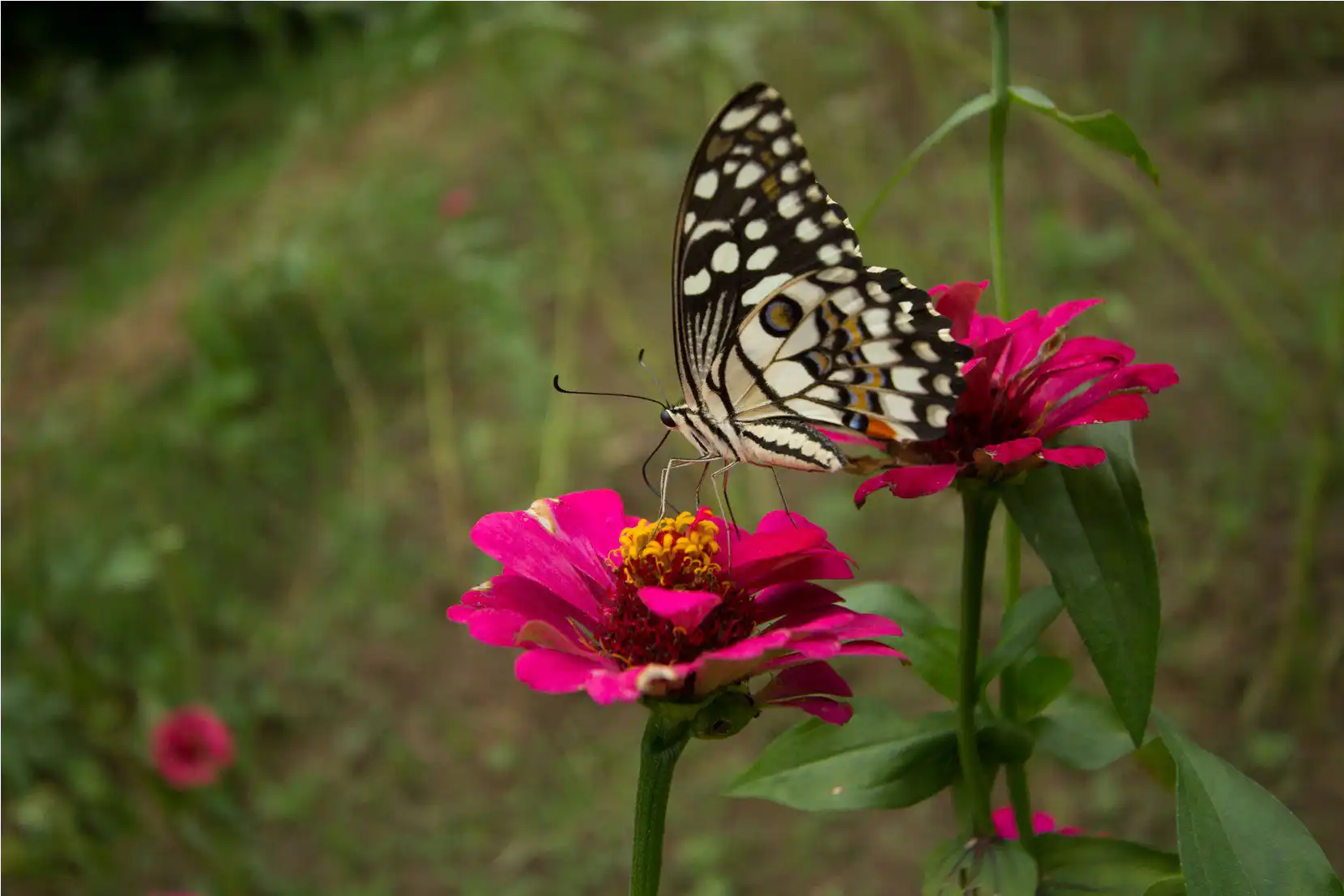
As much as this word “INSECT” might bring discomfort or scare to any lay person, I find them the most fascinating creatures ever. A being that is much tinier than us yet adored with brilliantly beautiful colors, some bright … .Some with the magic of camouflage and their teeny little brains are capable of thinking brilliant methods of survival that a human rain can ever imagine. You just start following one and they give you a glimpse of the most amazing moments in the wild.

Table of Contents
    Add a header to begin generating the table of contents
    Tortoise beetle on a green leaf
    Dung beetle rolling a dung ball
    Camouflaged stick insect on a branch
    Colourful jewel beetle on a leaf

    A Special Visitor

    On one such evening during the monsoon as I was sitting in the reception here at Kanha Earth Lodge , a beautiful creature walked into the office sticking close to the wall. 

    At a distance it seemed like a long walking leaf, I went close by thinking there might be an insect hiding underneath the leaf. As I took a closer look, the whole walking leaf itself turned out to be an insect – A violin mantis !!!! a variety of praying mantis.

    Praying mantis come in various colours and interesting forms. India is home to over 184 species of praying mantises.

    These smaller creatures also form an important part of the biodiversity travellers can observe during a wildlife safari in India.

    Violin mantis resting on a wall

    The Praying Mantis

    Praying mantises are insects that constitute the order Mantodea. They are closely related to cockroaches and termites, collectively comprising the superorder Dictyoptera.

    Also Read: Invasive plant Species in India: Threats to Biodiversity and Ecosystem Health

    Scientific Classification

    Classification Level Name
    Kingdom Animalia
    Phylum Arthropoda
    Class Insecta
    Superorder Dictyoptera
    Order Mantodea
    Praying Mantis in India

    Why The Name ?

    The typical resting posture (praying posture) marked by its upright body and folded legs, gets the mantis, its name. The forelegs are specialized to seize and grasp their prey, they are equipped with tiny spines as well.

    Parts Of Praying Mantis:

    The body of the praying mantis can be divided into three main parts : Head, thorax and abdomen.They are characterized by a highly mobile, triangular head with large compound eyes with a stereoscopic vision.

    Parts of a praying mantis

    The Stereoscopic Vision :

    Praying mantises are known to be the only insects in the world known to have “the Stereoscopic vision/ the 3D vision.” By using both of their eyes at once, they calculate the distance to an object to trigger a flight.

    Stereoscopic vision of mantis

    How The Mantis’s 3d Vision Works ?

    The Setup: The two large bulging compound eyes are set far apart on their heads. Because they are at different angles, each eye sees a slightly different image of the same object.

    Depth Perception: The mantis’s brain compares the two images thus calculating the angle between its eyes and target. This creates an accurate measure of the depth hence letting the mantis know exactly when its prey is in striking range.

    Motion based: Unlike humans, a mantis cannot judge the distance to a still object. Its 3D vision only works when the prey is moving.

    DIET: Praying mantises are mainly carnivores. They are known to take on anything from grasshoppers to frogs. They are even known to attack and eat small snakes.  

    With their camouflaged bodies, razor-sharp forelimbs, and heads that can rotate to up to 180o, these insects are fearless and can take on the most formidable prey. Spiders, crickets, frogs, mosquitos, cockroaches, bees, butterflies, humming birds, beetles, grass hoppers, lizards, caterpillars and rodents are part of their menu.

    Also Read: Mongooses in India: The 6 Species and How to Identify Them

    Praying mantis eating a dragonfly
    Praying mantis eating a fly

    Mantis - The Amazing Hunters :

    Most mantises are ambush predators, stealthily waiting for their prey to approach. Once within reach, they quickly grasp the prey using their raptorial forelegs.

    Also Read: Flying squirrels of India

    Defense Mechanism:

    • When threatened by a predator, they might stand tall and spread their forelegs, expanding their wings and fanning them showing off the vibrant colors underneath. If the threat persists, they may strike the predator with their forelegs and attempt to pinch or bite it.
    • Mantis also exhibit a rocking motion through rhythmic side-by-side movements of their bodies. 

    This behavior provides an illusion of vegetation moving in the wind thus escaping the predator’s notice.

    Praying mantis threat display

    Mating:

    SEXUAL DIMORPHISM : In almost all the mantis species the females are much bigger and bulkier than the males as they need large body mass to to develop and store their eggs. Males are much slimmer and have a streamlined body.

    CANNABALISM : Another strange behavior observed is that the females are known to eat the male’s head once mated. This behavior is especially noted when the prey availability is less.

    Praying mantises mating on leaves

    Life Cycle Of Mantis:

    Praying mantis undergoes incomplete metamorphosis. Unlike butterflies which undergo a complete 4 stage transformation, the praying mantis has only three stages :- Egg, nymph and adult.
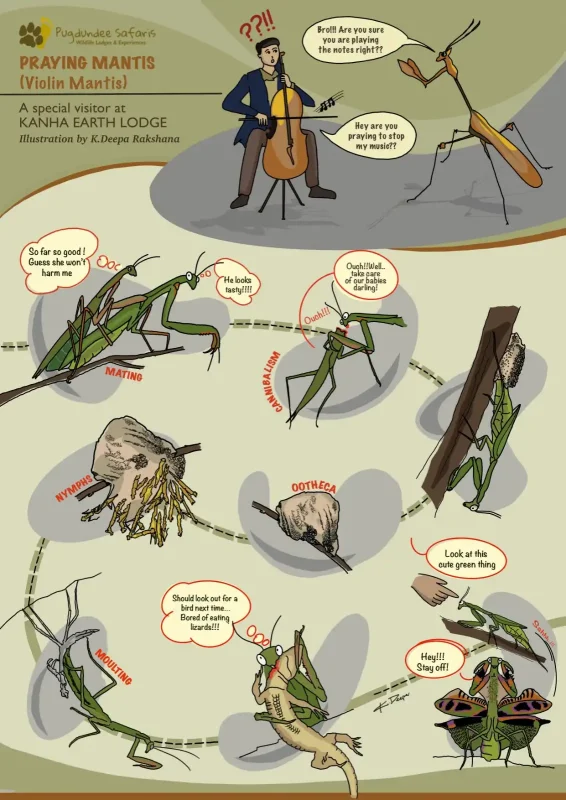
    Infographic showing praying mantis mating, cannibalism, ootheca, nymph hatching, moulting and threat display.

    1. Egg Stage:

    After mating, the female lays between 100 to 400 eggs. She covers them in a frothy fluid that rapidly hardens into a protective, Styrofoam-like structure called an ootheca.
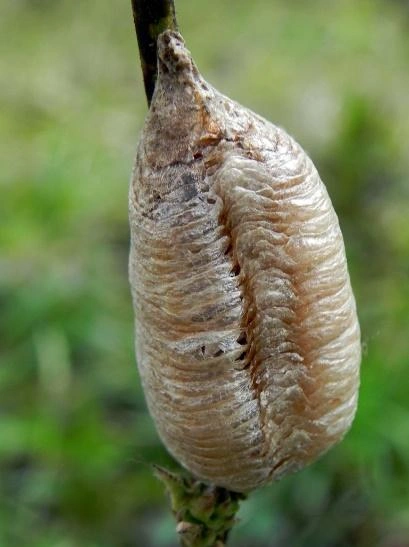
    Praying mantis egg sac or ootheca

    2. Nymph Stage:

    The tiny nymphs hatch and emerge from openings in the egg case all at once.  Newly hatched nymphs look like tiny, wingless versions of adult mantises. Because their hard outer skeleton (exoskeleton) cannot grow, nymphs must continuously shed their skin to get bigger.  A mantis goes through 5 to 10 molts (the developmental stages between molts are called instars) before reaching maturity. During a molt, a soft new exoskeleton forms underneath the old one, which then expands and hardens. 
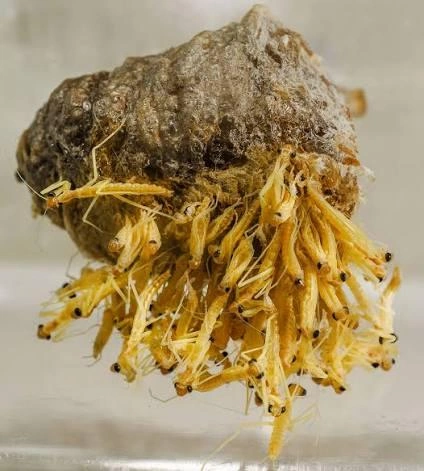
    Young mantis nymphs hatching from egg sac

    3. Adult Stage:

    The praying mantis emerges with its fully formed, functioning wings and mature reproductive organs during the final molt. Once a mantis reaches adulthood, it stops moulting and cannot regrow any lost limbs. The adults spend their life hunting, mating, and laying a new generation of oothecae .

    In the wild, the average lifespan of a praying mantis ranges from 6 to 12 months.
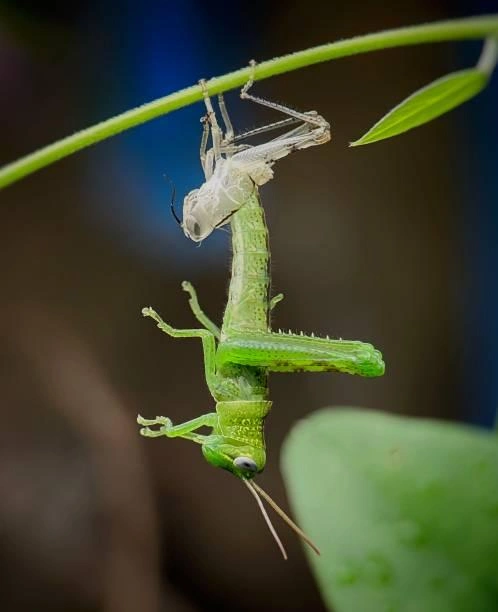
    Mantis nymph moulting its exoskeleton

    Colour Morphs In Mantis

    A FASHION STATEMENT (THE BEAUTY OF CAMOFLAGE) :

    Now that we have discussed science, let’s take a moment to see how beautiful these mantises are!!! The following images given below shows how amazing their camouflage and adaptation to various habitats can be!!

    Few like lichens, few like stick, few like moss they make a fashion statement in the insect kingdom. 

    Conclusion

    There are about over 2400 varieties of praying mantis in the world. India is home to almost 184 different varieties. Violin mantis, Indian flower mantis, Giant Asian mantis , stick mantis are a few of them which are often admired and photographed.

    The following is a PHOTOGRAPHY TIP from ASHISH TIRKEY

    • Use a Macro lens to get in close to the mantis and if possible attach an extension tube as well (Though you might lose a few f-stops but it’s worth it). 
    • Use Manual mode on macro lens , I use a Canon 100 mm non-IS lens mounted on my Canon 40 D. 
    • Suggest to take meter reading of the background element in the frame in order to get a correct exposure.
    • Use inbuilt flash and keep white balance on flash mode. While doing manual focus move back and forth to get tack sharp focus on its eye.
    • Insects like mantis give you ample amount of time to focus correctly and play with your meter readings. It’s quite a challenge to do the same with other insects, as they continuously keep moving and their background elements keep changing every time.

    These techniques can be especially useful for travellers documenting insects and other wildlife during a wildlife photography tour in India.

    Also Read: Indian Vulture Species

    Frequently Asked Questions :

    In the wild, most praying mantises live for about 6 to 12 months, a short but eventful life spent hunting, mating and laying the next generation.

    Just three, egg, nymph and adult. Unlike butterflies, the mantis undergoes incomplete metamorphosis, so the nymphs already look like tiny, wingless adults.

    It's all in the posture, an upright body with folded forelegs makes the mantis look like it's caught mid-prayer, and that's exactly how it earned its name.

    It's called an ootheca, a frothy fluid the female lays over her eggs that hardens into a protective, Styrofoam-like case until the nymphs hatch.

    About the Author

    Deepa Rakshana, Naturalist at Kanha Earth Lodge, Pugdundee Safaris – An architecture graduate from Chennai, who decided to follow her passion and pursue her dream career dedicated to the wild. After completing the Pronat training program, she began her professional journey in Pench and now currently working as a naturalist in Kanha. She is passionate about connecting people with wildlife and creating meaningful experiences in nature. For her, every day in the jungle is unique, filled with surprises, unforgettable encounters, and magical moments that make her work both exciting and deeply rewarding.