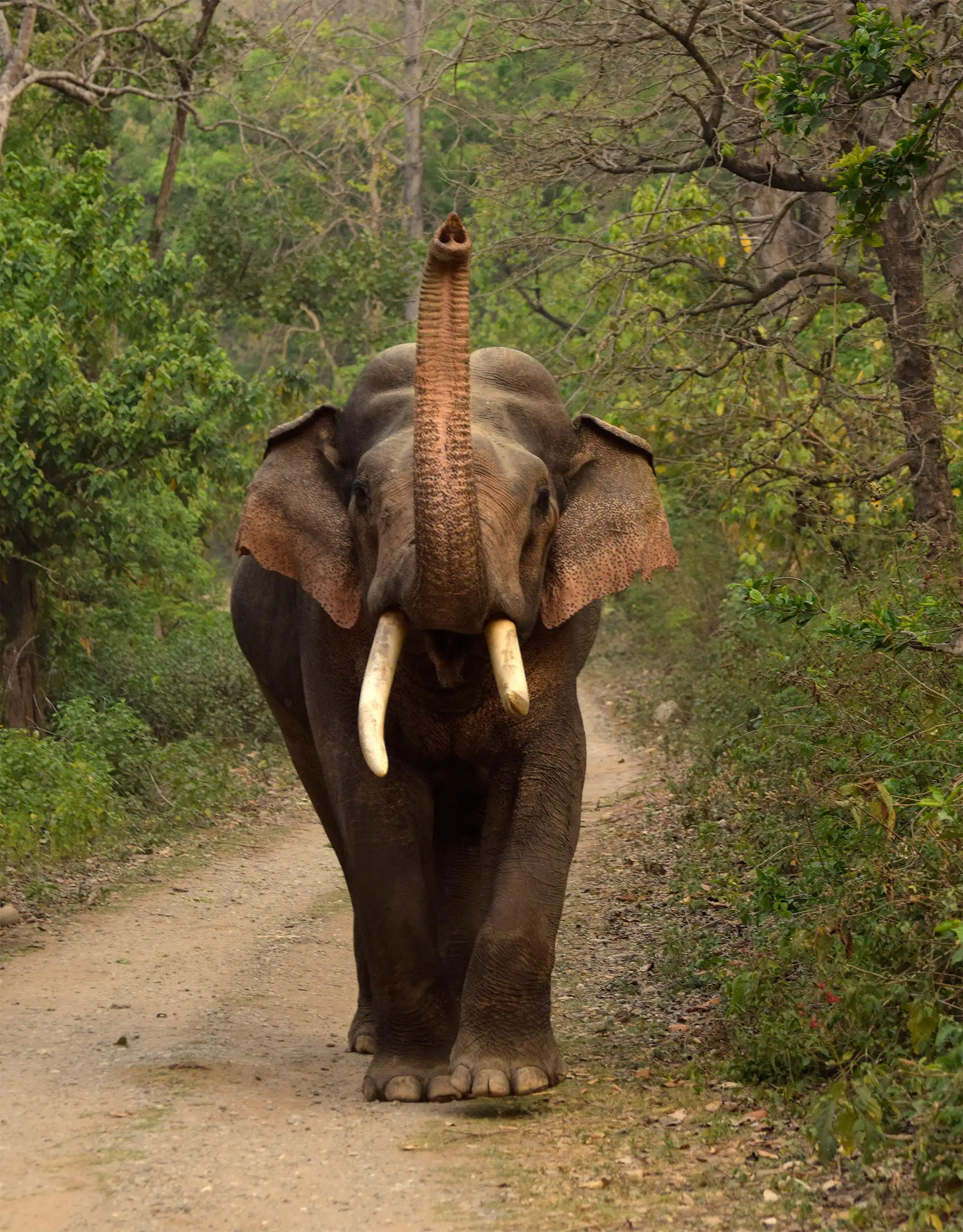
Facts about Elephants : World Elephant Day
We know them as the largest living land animal on Earth. In a country like India they hold a significant place in the Hindu mythology. Elephants are mentioned in the Vedas and in the epics as ancient as the Mahabharata and the Ramayana and in the other ancient texts of Gajastram and Hastiayurveda. From Airavata; the holy white elephant to Lord Ganesha; the elephant-headed God (perhaps the most loved one) elephants form an integral part of Indian cultures, religions and folklore.
August 12 is dedicated to this pachyderm as World Elephant Day and below are 12 interesting must read facts about this colossal yet endearing species.
Different Species – Elephants belong to the family Eliphantidae. There are three species of Elephants out which one is Asian (Elephas maximus) and other two are African; African bush elephant (Loxodanta Africana) and African forest elephant (Loxodanta cyclotis).
Know the Difference – There are some basic differences that help us recognize the different species. The most obvious ones are:
- Asian Elephants are slightly smaller and have smaller rounded ears as compared to African Elephants.
- Asian Elephants have convex back while African elephants have saddle-shaped back.
Listening Power – These proboscideans (trunked creatures) can hear one another’s trumpeting calls up to 5-6 kilometers away.
Listening through Feet – These pachyderms are gifted with the ability to communicate through their feet. Elephant’s foot stomp produces vibrations in the ground that are picked up as the sub-sonic resounds by other elephants through their feet enabling them to communicate seismically.
Matriarchal Society – Elephant groups are led by a matriarch as adult males are solitary wanderers and connect with the group only during mating. Matriarch is the older female who leads the family of adult and sub adult females, calves and young males.
Wisdom Tool – Elephants possess an incredible memory and with a highly developed brain they are considered to be very intelligent creatures.
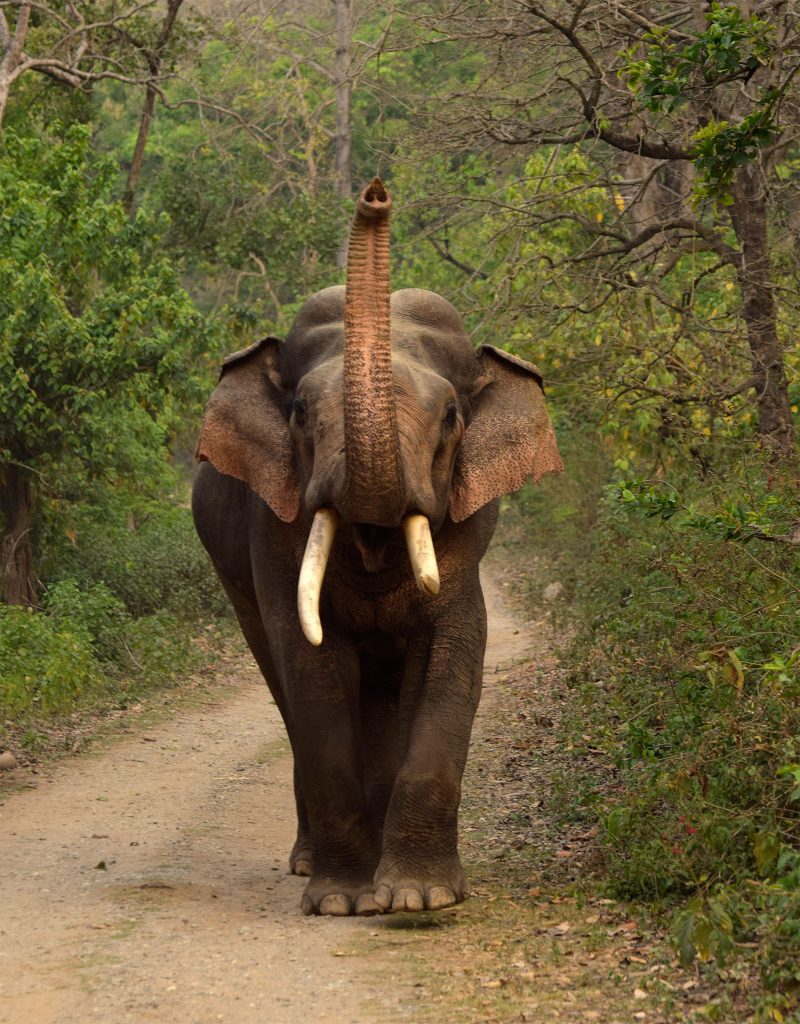
Kith and Kin – It is known that when the food resources are scarce, they divide into nuclear families of a mother and her calves whereas when the food resources are in abundance the nuclear families rejoin their kith and kin to form large family groups.
Water Lovers – Elephants are very good swimmers and love to play in water and mud.
Social Being – You tend to get frighten due to its giant size but this colossal mammal is highly sensitive as well as caring for their calves. Elephants are known to exhibit grief, compassion and joy and use their trunk to greet each other.
Tusk and without Tusk – Males with poor development of tusks are known in India as Makhna and males with developed tusks are known as Dauntela.
Guessing Age – To know the approximate age of an elephant, look at its ears. As they age, the amount of ear fold increases inwardly in depth. Also, older elephants have more sunken cheeks and foreheads.
Supports Ecosystem – Elephants form an integral part of our ecosystem.
Intelligent, emotional and intriguing, undoubtedly elephants are keystone species playing key role in maintaining the biodiversity. Man-elephant conflict and poaching for their tusks continue to be the biggest threats to their existence. Given what we know about the elephants, their role in ecosystem and what they continue to teach us about animal intelligence, it becomes important than ever to raise awareness about their conservation.
Courtesy: Malvika Verma | Photo Courtesy : Harpreet Dhillon

Pugdundee Safaris is recognized as one of India’s leading responsible safari companies. With seven intimate jungle lodges in Central India and many bespoke wilderness experiences it presents the very best of the Indian subcontinent wildlife & hospitality. Between 2009 and 2026, we have been awarded for our excellence in wildlife safaris, our commitment to sustainability, our experienced naturalists and our pioneering mobile safari initiative. Pugdundee is a Hindi word meaning a foot trail commonly used by humans and animals, this word is popularly used for such beaten paths in the Indian jungles. We continuously strive to deliver the best possible guest experience, while still integrating the conservation of jungles and the people living around. We are motivated by the hope of reaching out to people in the remotest areas of our country, as we believe that they are the front-runners of wildlife conservation. However, maybe just a drop in the ocean we consider that we are making a significant contribution to wildlife conservation and rural economy wherever our lodges are.