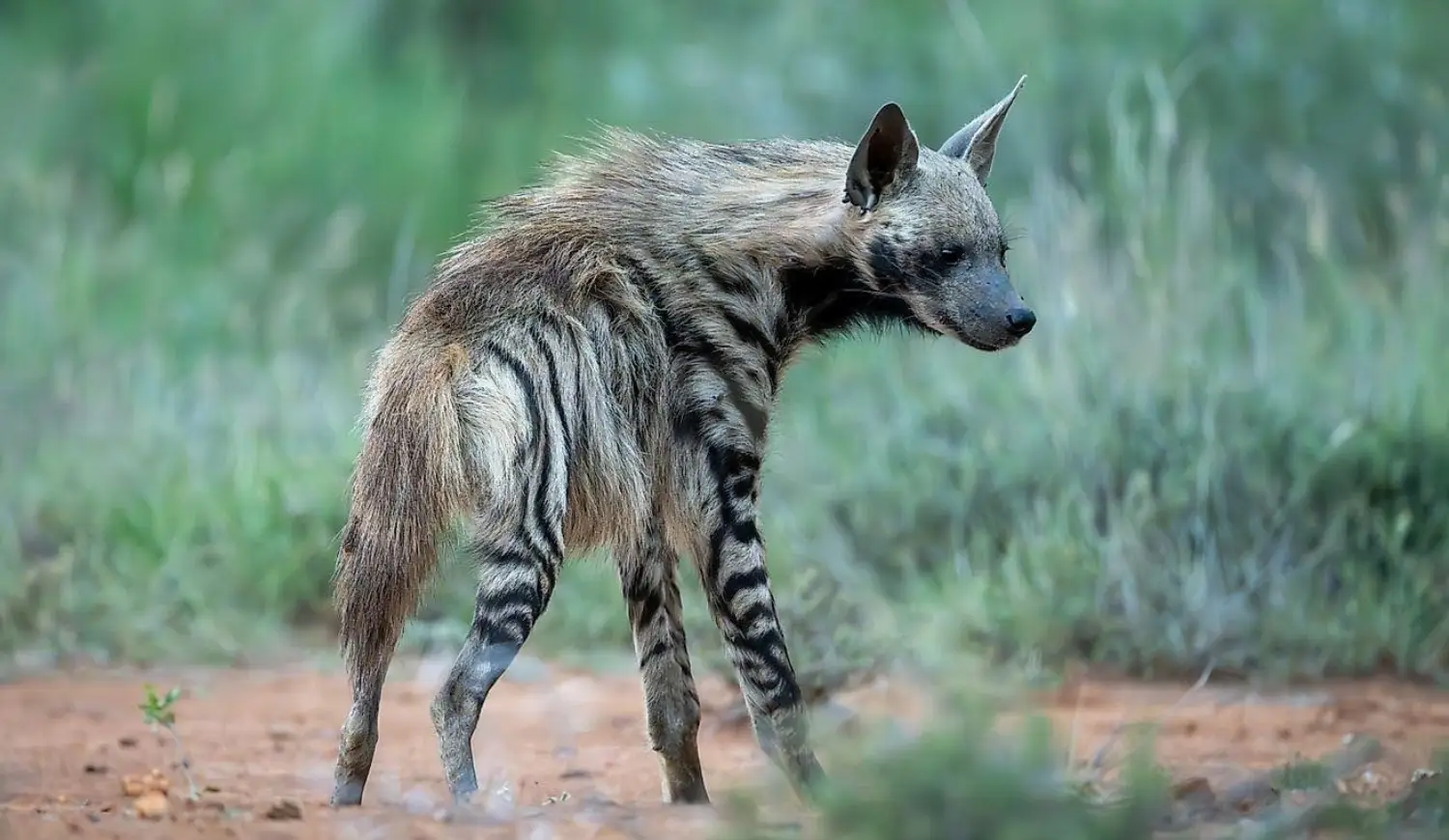
What Is a Striped Hyena?
At first glance, hyenas may appear dog-like because of their long muzzles. Hyenas belong to their own family, Hyaenidae, within the order Carnivora, and are more closely related to cats and other feliform carnivores than to dogs.
With exceptionally strong jaws, powerful neck and shoulder muscles, and specialised teeth capable of crushing bone, the striped hyena occupies an important ecological niche as a scavenger.
Striped Hyena vs Spotted Hyena: Key Differences
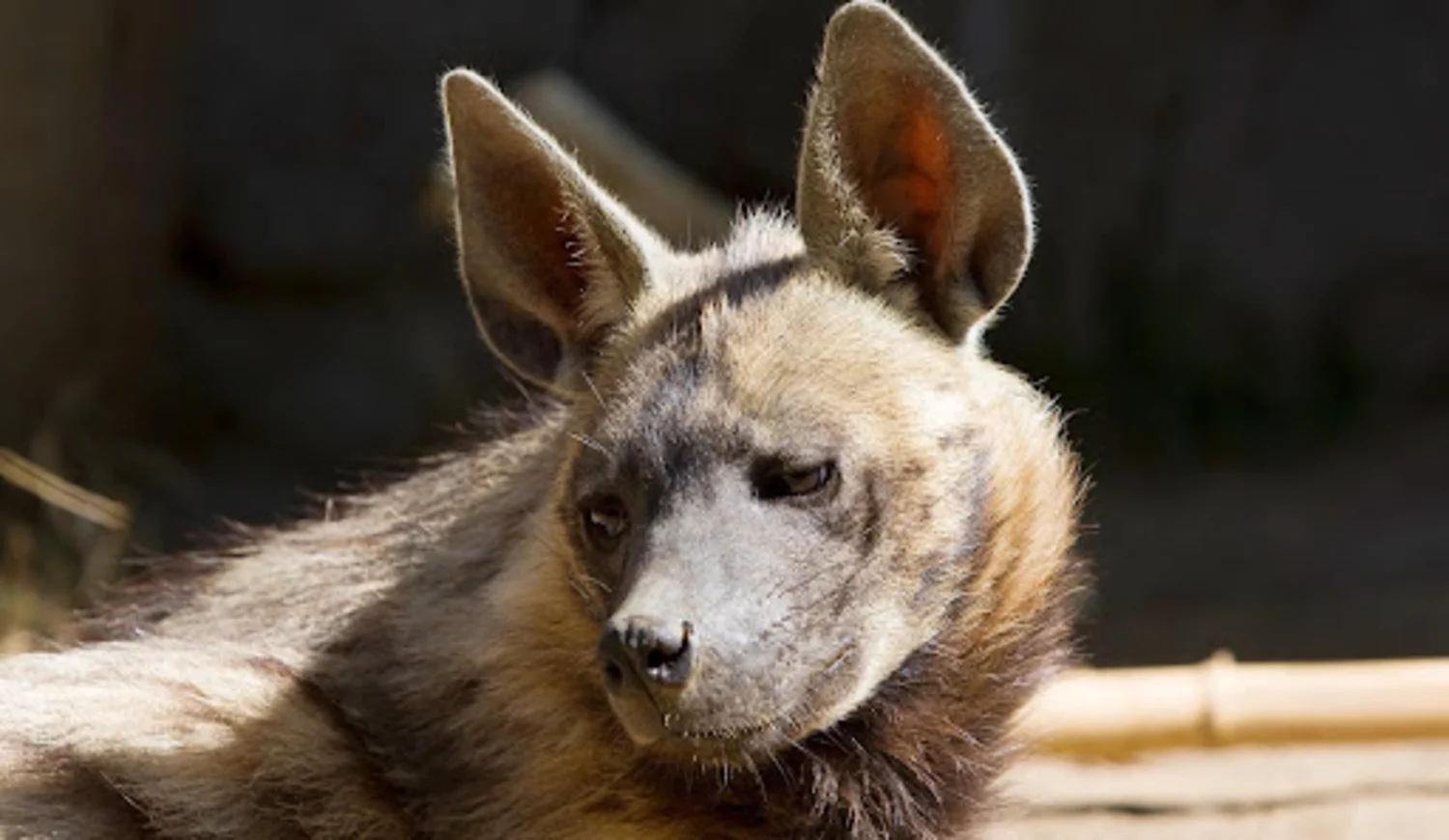
Unlike the highly social and predominantly hunting lifestyle of the spotted hyena, the striped hyena is a more generalised and opportunistic forager. It obtains much of its food through scavenging, while also hunting smaller animals when opportunities arise.
Physical Characteristics of the Striped Hyena
The striped hyena is a medium-to-large carnivore, with adults generally weighing around 25–45 kg.
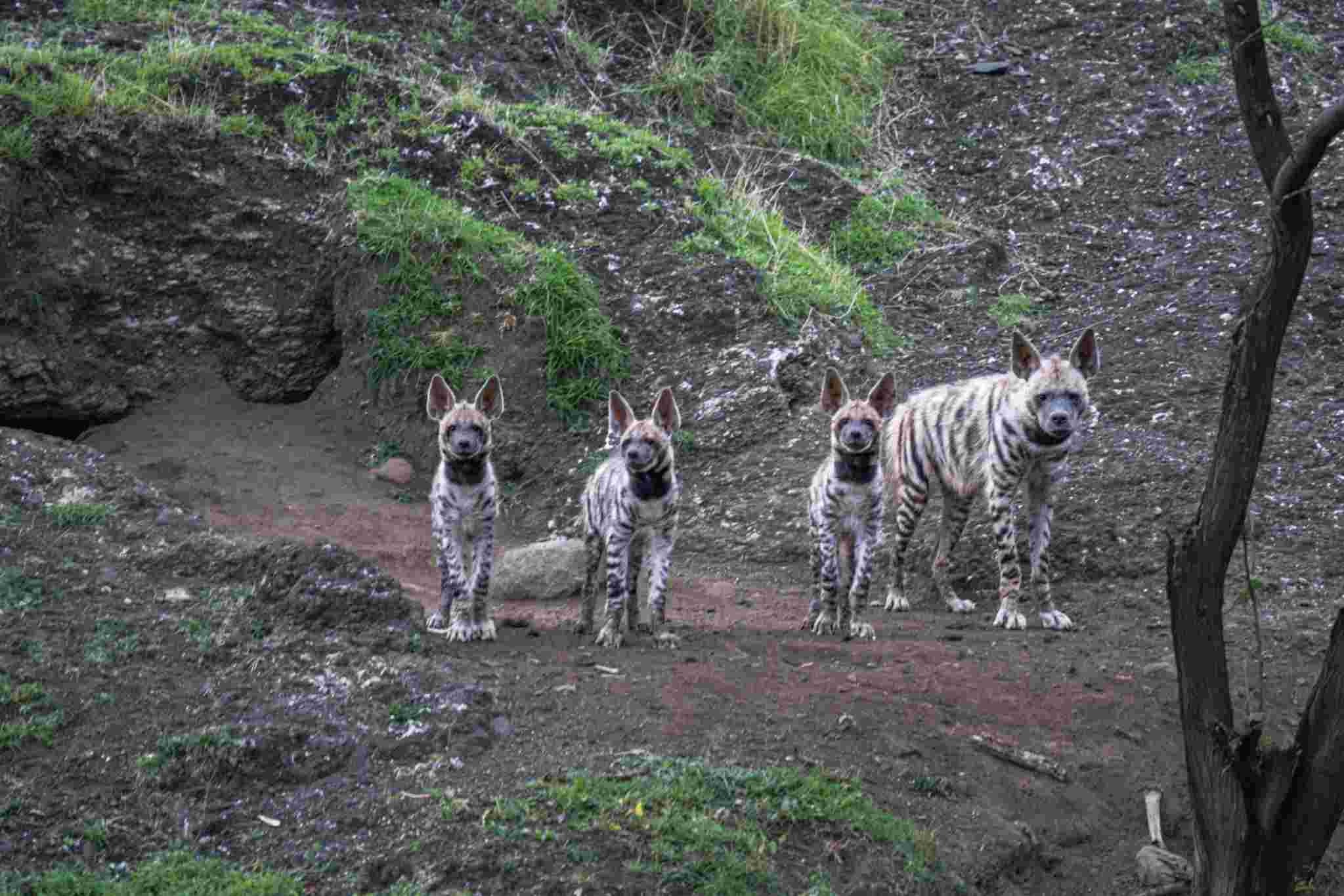
Its most distinctive feature is the vertical dark striping across its relatively sparse, greyish coat. The stripes are particularly prominent in younger animals and may become less distinct with age.
Another striking feature is its long hair along the neck and back, forming a prominent mane. The hair of the mane, as well as the bushy tail, can become erect when the animal is alarmed, excited or threatened.
By raising its mane and tail, a striped hyena can make itself appear considerably larger than it actually is, when confronted by a rival or potential threat.
The Striped Hyena’s Characteristic Gait:
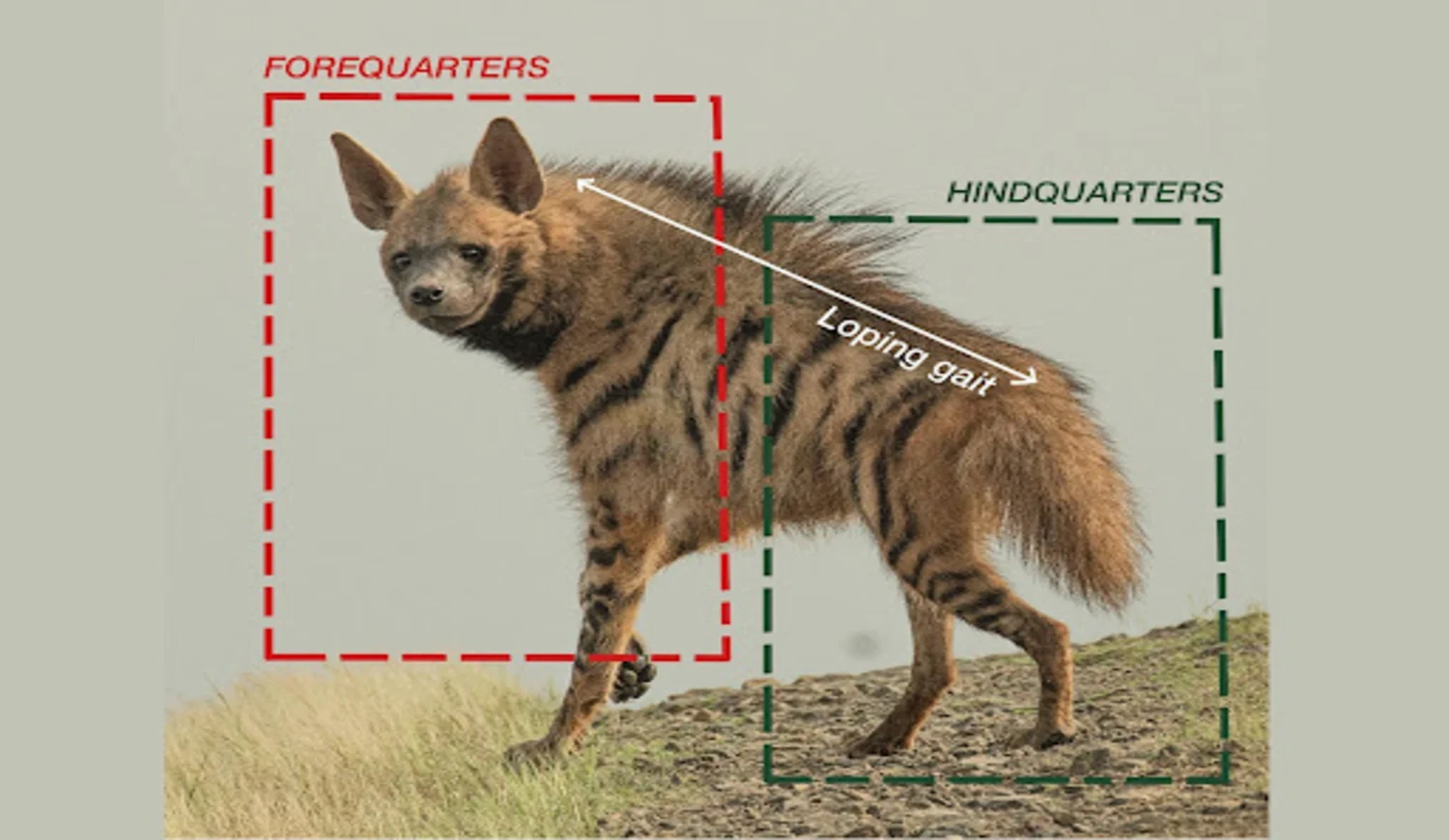
One of the easiest ways to recognise a hyena in the field is its unusual gait.
The forequarters are taller and more heavily built than the hindquarters, giving the body a distinctive sloping profile. As it moves, this creates the characteristic loping or downward-sloping gait for which hyenas are famous.
The head is large and powerful, equipped with heavy jaws. The ears are big and pointed, providing the acute hearing a nocturnal scavenger needs to locate food and detect threats.
What Do Striped Hyenas Eat?
Striped hyenas are primarily scavengers, often feeding on carcasses and remains left behind by larger predators such as leopards and other carnivores.
But they are far from being dependent entirely on carrion. They are opportunistic feeders and may prey on rodents, birds, reptiles and other small animals. They may also consume insects, fruits and plant material.
Their flexible diet allows them to survive in a wide variety of environments, particularly the dry and semi-arid landscapes where they are most commonly found.
They can also take advantage of opportunities created by other predators. When a larger predator abandons a kill, a hyena may patiently move in and feed on whatever remains.
This adaptability is one of the reasons the striped hyena is such a successful survivor.
How Do Hyenas Digest Bones?
This is perhaps one of the most remarkable things about hyenas.
By the time a striped hyena reaches a carcass, much of the easily edible meat may already have been consumed by other scavengers and predators. What remains can include tough hide, tendons and large bones.
The striped hyena is exceptionally well equipped to exploit these leftovers.
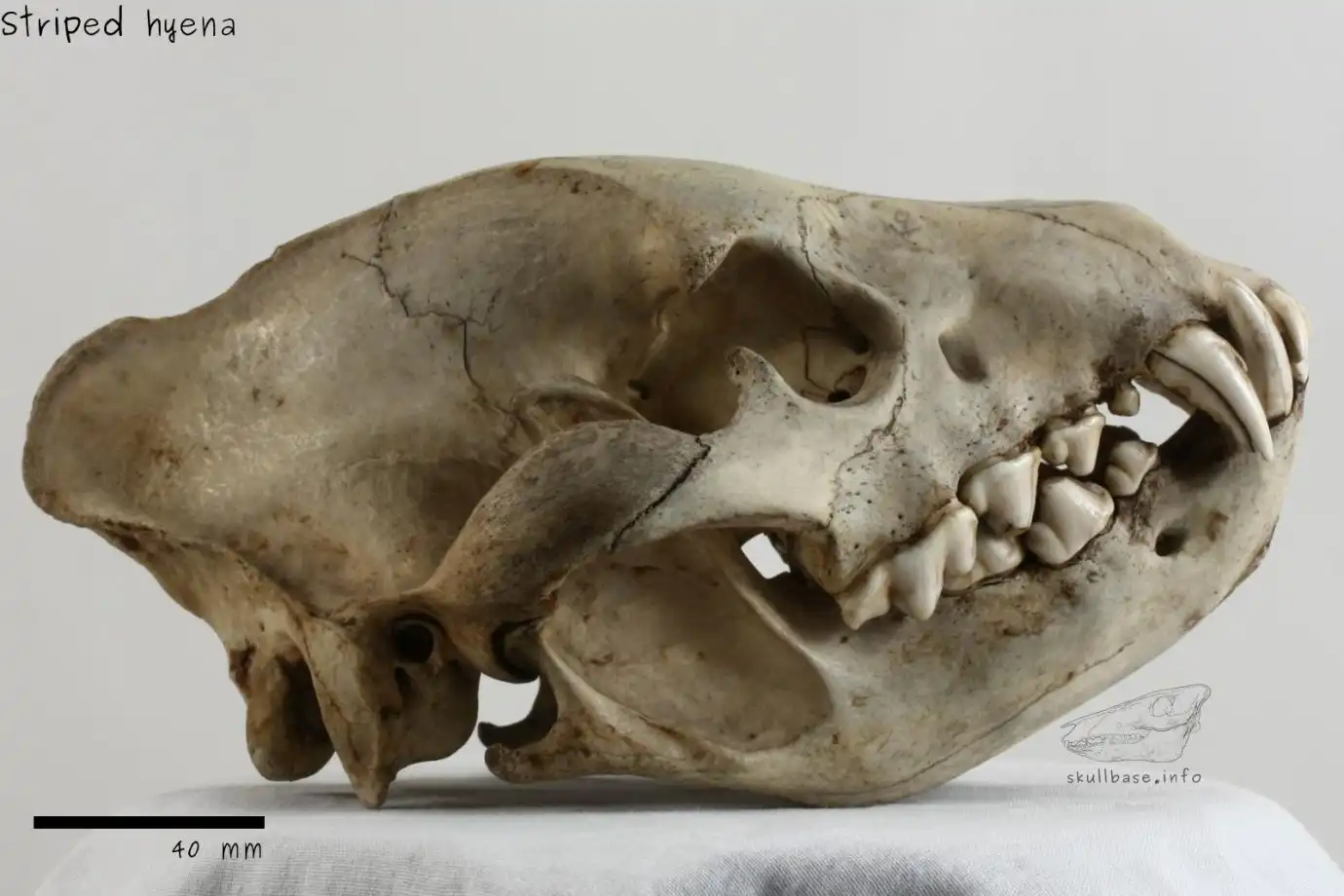
The Skull:
The sagittal crest of the skull increases the area of origin for the temporal muscles and the well-developed masticatory muscles, which facilitate the seizing and crushing of prey.
Powerful Jaws and Specialised Teeth:
Their massive jaw muscles and specialised cheek teeth allow hyenas to crush and crack bones. They can break open large bones to access the nutrient-rich marrow inside and consume pieces that would be inaccessible to many other carnivores.
Their skull is also strongly reinforced to withstand the enormous stresses produced while crushing hard material.
A Highly Acidic Stomach:
The process doesn’t end with crushing.
Not everything is completely digested, however. Indigestible material is passed out in the faeces, which can appear pale or whitish when the animal has consumed a large amount of bone. This extraordinary ability allows the striped hyena to make use of parts of a carcass that many other animals cannot.
In short, the striped hyena digests bones through:
-
- Powerful jaws and specialised teeth that crush and crack the bones
-
- A highly acidic stomach that breaks down the mineral components
-
- Indigestible material passed out as pale, bone-rich scat
In doing so, it performs an important ecological service: removing animal remains from the landscape and returning nutrients to the ecosystem.
Striped Hyena Behaviour and Life Cycle
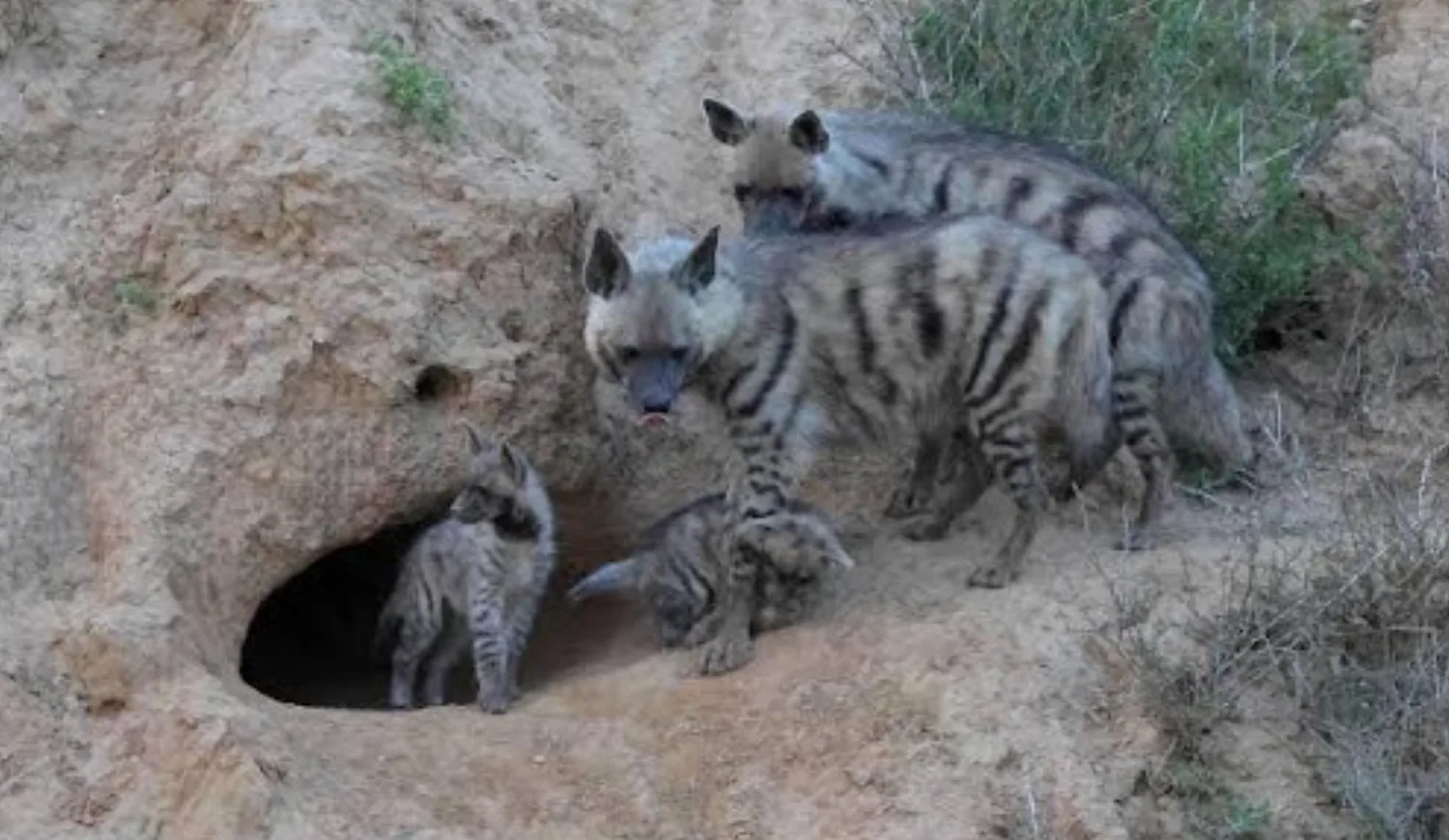
Striped hyenas were once widely described as solitary animals or animals that lived primarily in pairs. However, research has revealed a more complex social system.
They may live in small social groups or clans, with females and their offspring forming an important part of the social structure.
The Natal Den
Females give birth in secluded natal dens, usually located in protected areas such as rocky crevices, burrows or dense vegetation.
The natal den provides a secure environment for the newborn cubs during their earliest weeks.
The Nursery Den
Cubs may later be moved to communal nursery dens, where young from different litters can be found together.
Female helpers may contribute to caring for the young, including bringing food to the den. This makes striped hyena society considerably more complex than the image of a purely solitary scavenger suggests.
Striped Hyena Life Cycle
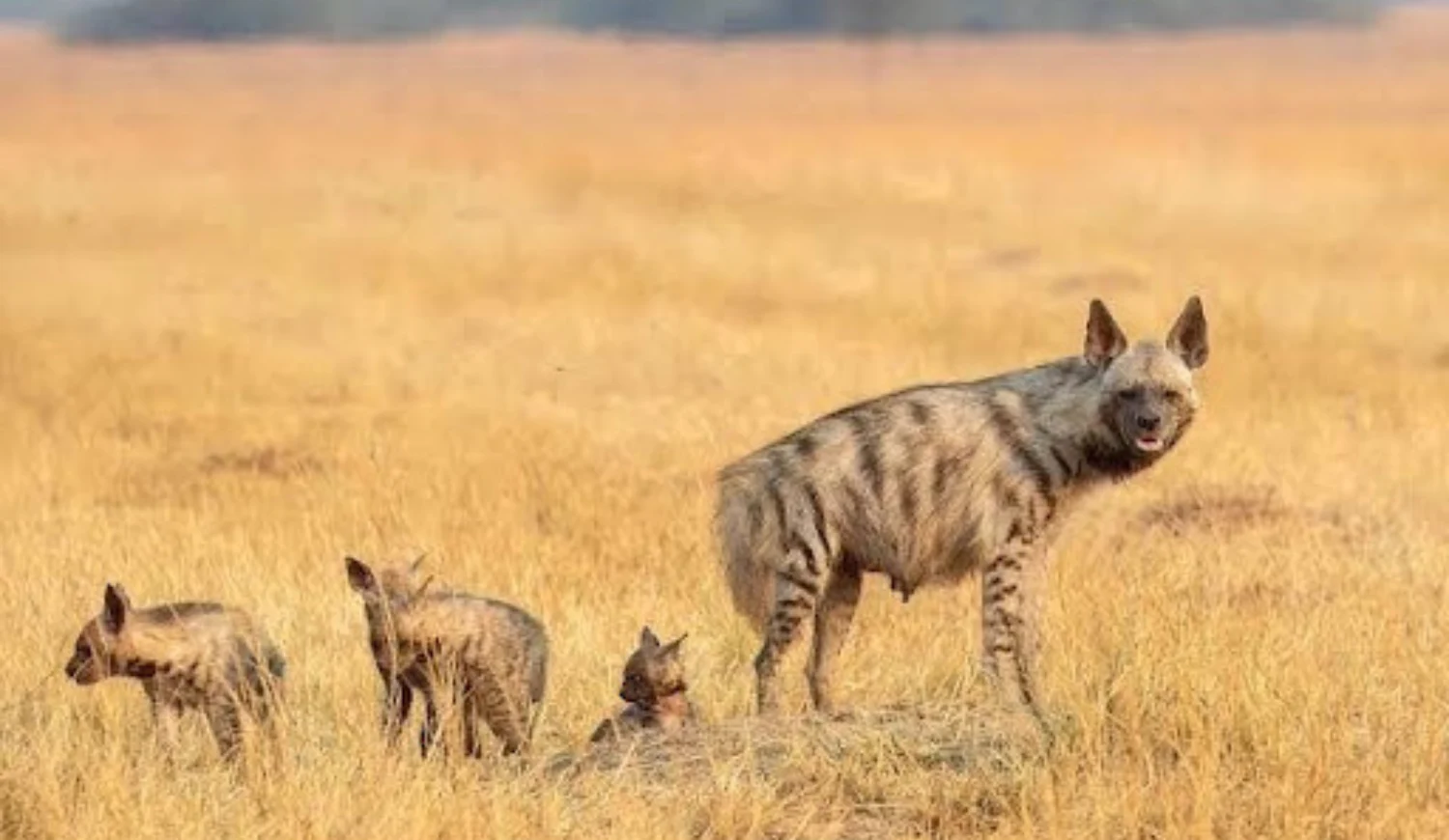
Striped hyenas reproduce throughout the year, although births may peak during winter.
| Stage | Development |
| Gestation | ~90–92 days; litter of one to four cubs |
| 0–1 month | Cubs born blind, greyish-white with dark stripes; eyes open after about a week; teeth emerge in the first few weeks; begin eating meat at around one month |
| 2 months and above | Moved to a communal nursery den; suckled for several months; food brought to the den by the mother and female helpers |
| 12–14 months | Cubs become independent |
| 2–3 years | Reach sexual maturity |
| Lifespan | About 10–12 years in the wild; approximately 20 years in captivity |
The area around active dens can reveal fascinating clues about hyena life. Pieces of bones, hide, skulls, hooves and horns may be scattered around as cubs feed and play. Tracks and scat around these areas can also help reveal the presence of an active den.
Territory and Scent Marking
Striped hyenas communicate extensively through scent.
They use faeces, urine and secretions from their anal glands to mark their territories and communicate with other individuals. Anal gland secretions may be deposited on prominent vegetation, leaving a strong scent signal.
Scats may also be deposited repeatedly at specific locations or latrine sites, particularly around denning areas. Over time, these can accumulate into dung piles.
Striped Hyena Tracks and Signs
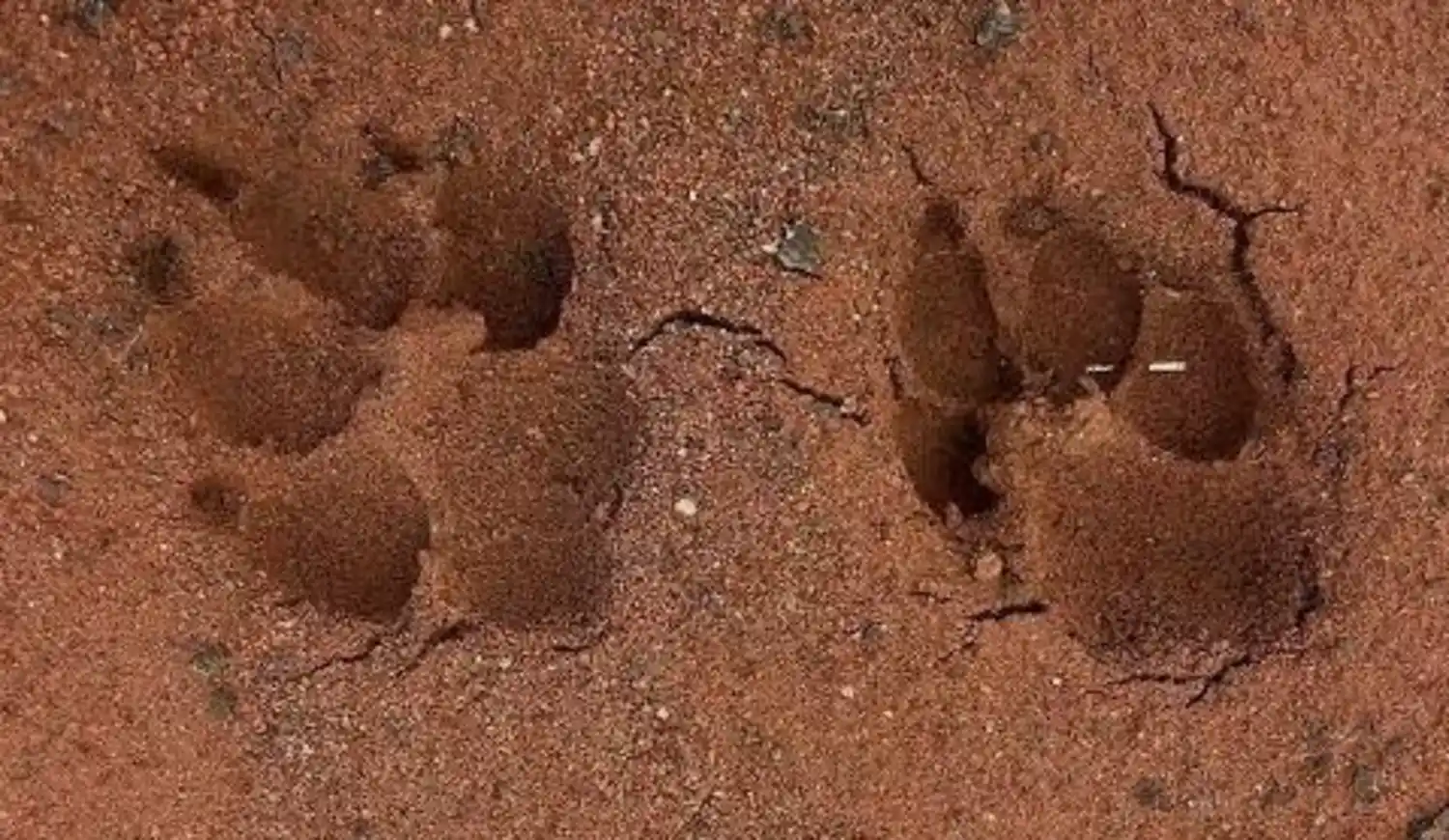
Striped hyena tracks are distinctive.
The forefoot is noticeably larger than the hindfoot, reflecting the animal’s powerful front end. Four toes surround a central foot pad, creating a characteristic pattern in suitable soft soil.
Like wild dogs, hyenas cannot retract their claws, so claw marks may also be visible in clear tracks.
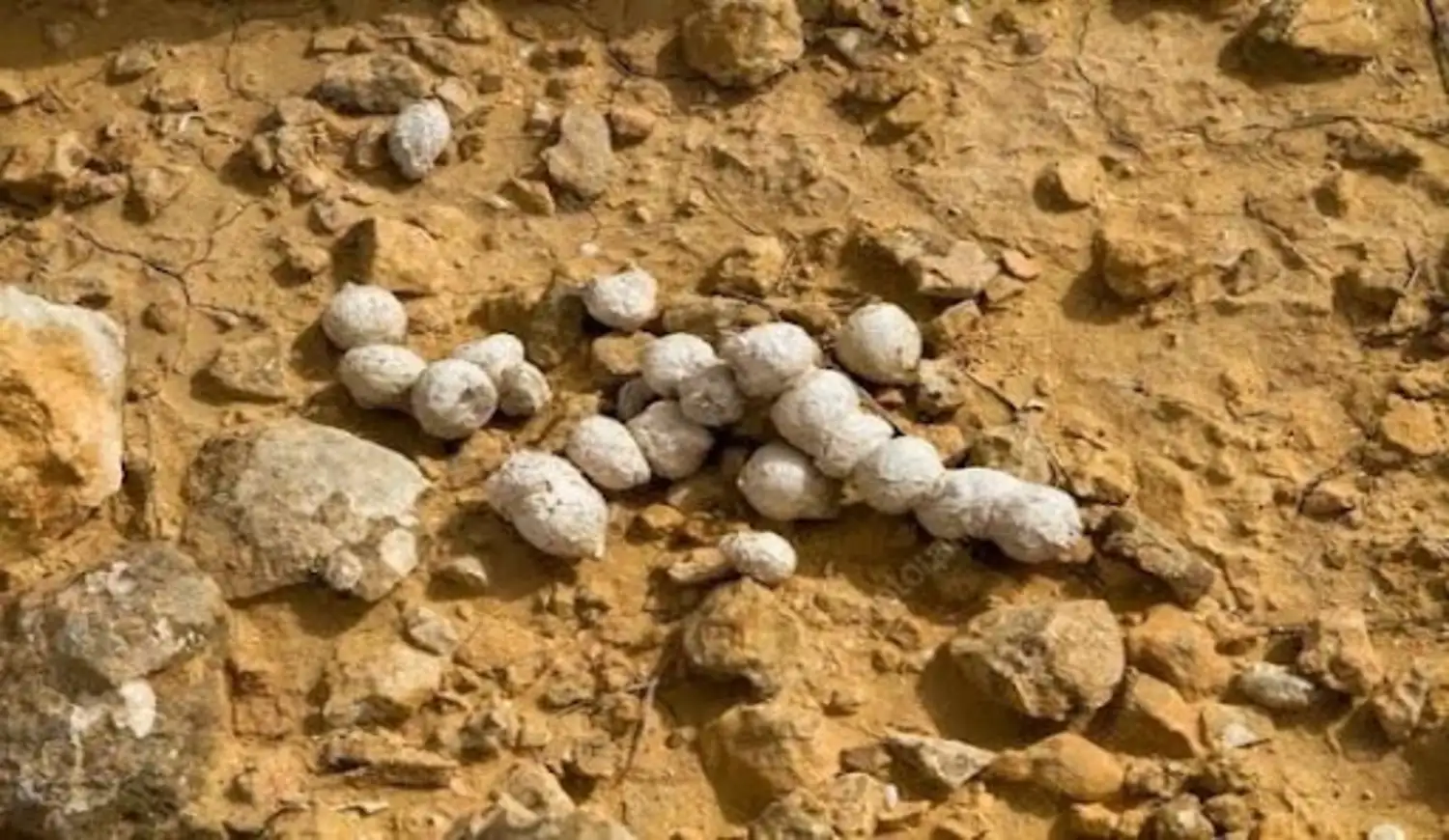
Their scat provides another useful clue. After consuming large quantities of bone, the droppings can become hard, pellet-like and pale or whitish.
Where Are Striped Hyenas Found?
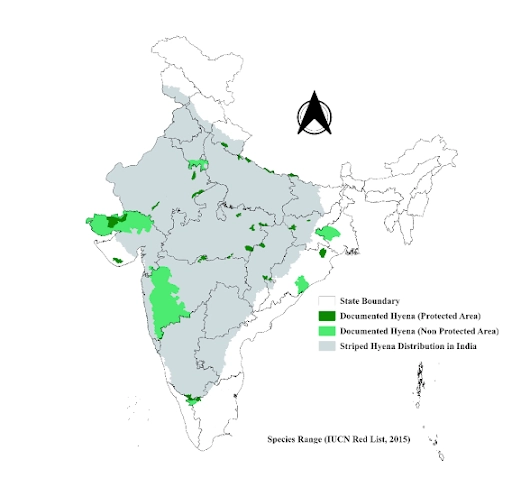
The striped hyena is the most widely distributed hyena in the world. Historically, the striped hyena had a wide distribution extending across parts of North Africa, the Middle East and Asia, including the Indian subcontinent.
In India, its distribution is throughout peninsular India south of the Himalayas in dry and semi-arid landscapes, including scrublands, grasslands, thorn forests and agricultural landscapes.
It is generally uncommon in areas of very high rainfall and dense evergreen forest, and absent in most of Tamil Nadu and Kerala.
Its ability to survive in landscapes influenced by humans is remarkable. Because striped hyenas are predominantly nocturnal and generally avoid direct contact with people, they can persist even in some areas with relatively high human densities.
Threats to the Striped Hyena
Despite their adaptability, striped hyenas face several threats.
Habitat Loss
The conversion of scrublands, grasslands and dry forests into agricultural land, infrastructure and other forms of development reduces suitable habitat and can eliminate important denning areas.
Conflict with People
Striped hyenas occasionally prey on livestock. In some cases, an individual entering a livestock enclosure may kill several animals in a single night. Such incidents can lead to persecution and retaliatory killing.
Poisoning
Poisoning of carcasses intended for predators can be particularly devastating. A hyena feeding on a poisoned carcass may die even when it was not the intended target.
Loss of Awareness
One of the greatest challenges is that the striped hyena is still poorly understood by the general public. Often viewed only as a frightening scavenger, its important ecological role is overlooked.
Striped Hyena Conservation
Conserving the striped hyena requires protecting both the animal and the landscapes on which it depends.
Key conservation priorities include:
-
- Protecting scrublands, grasslands, thorn forests and dry habitats.
-
- Safeguarding important denning areas.
-
- Addressing livestock depredation through better livestock-management practices.
-
- Increasing public awareness about the ecological role of hyenas.
The striped hyena is not simply a scavenger. It is an important part of the ecosystem, an efficient recycler that cleans up carcasses. They are truly essential members of India’s wild landscapes.
Best Places to See Striped Hyena in India
-
- Sariska Tiger Reserve
-
- Velavadar Blackbuck Sanctuary
-
- Ranthambore Tiger Reserve
-
- Jhalana Leopard Reserve
-
- Kuno National Park
-
- Achanakmar National Park
References
-
- Indian Mammals – A Field Guide
-
- Mammals of South Asia – A.J.T. Johnsingh
-
- Behavioral Ecology of the Striped Hyena (Hyaena hyaena) by Aaron Parker Wagner
Frequently Asked Questions
1. Why does a hyena have a unique gait?
2. How can hyenas eat and digest bones?
3. What is the gestation period for a hyena?
4. Name a few places to spot hyena in India.

Deepa Rakshana, Naturalist at Kanha Earth Lodge, Pugdundee Safaris – An architecture graduate from Chennai, who decided to follow her passion and pursue her dream career dedicated to the wild. After completing the Pronat training program, she began her professional journey in Pench and now currently working as a naturalist in Kanha. She is passionate about connecting people with wildlife and creating meaningful experiences in nature. For her, every day in the jungle is unique, filled with surprises, unforgettable encounters, and magical moments that make her work both exciting and deeply rewarding.