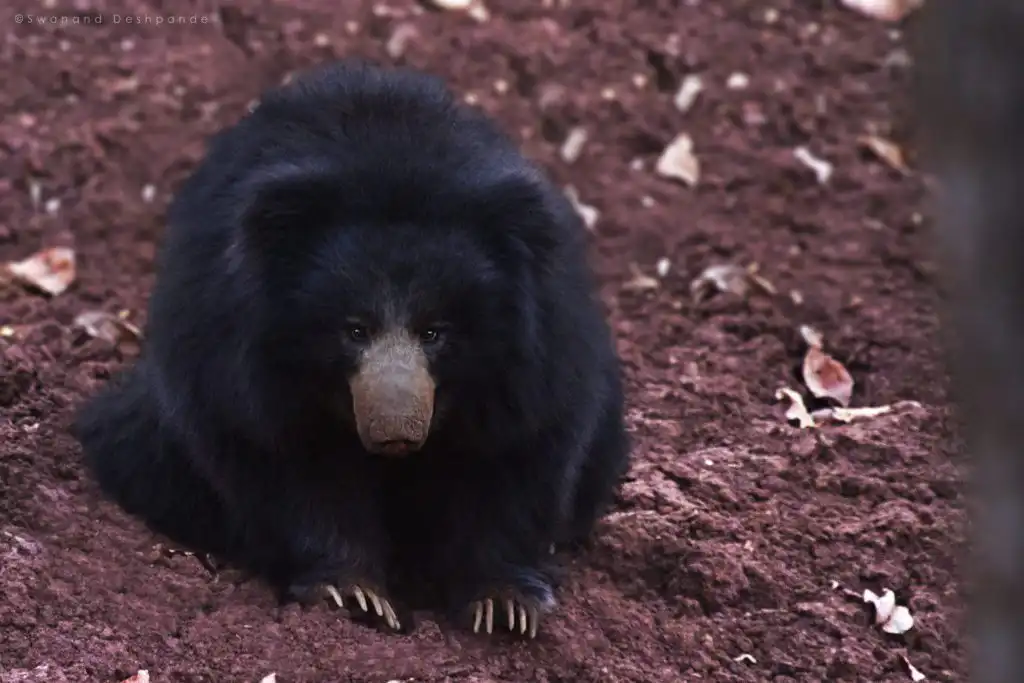
Though tagged as Sloth they seldom display their slothful attribute, except being mis-classified due to their long claws and arboreal nature. In fact, they are known as silent movers indulging most of their active hours searching for food.
Sloth Bear in India
For centuries Sloth bears have been trained and sported as dancing bears by a group of nomads called Qualanders, who entertained the crowds across their travel to various places in the country. In 1972 this practice was banned by the Indian government; however it continued for a very long time until WSPA (The World Society for Protection of Animals) and Wildlife SOS put an end to it forever.
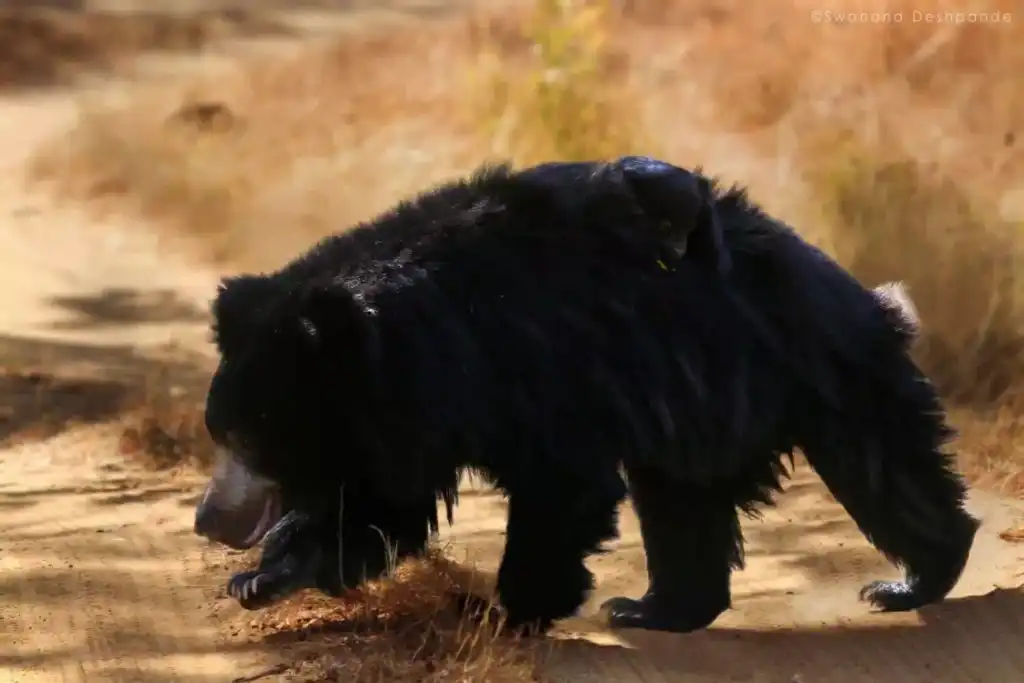
The wild population inhabits most of the tropical and subtropical zones of India, even thriving in small pockets near villages and farmlands. In Central India they foray Mahua flowers during the month of March and April. Mahua has a high economic value and may villagers including kids risk the danger of their lives when collecting Mahua flowers during the season.
The flowers are stored, dried and fermented to produce country liquor. Sloth bears possess dull eye sight and attack with their sharp claws when in danger. Both humans and bears like the early hours for Mahua and that’s when the maximum attacks happen.
Sloth Bear Characteristics

Size of fully grown male bears varies from 80 to 180 kgs whereas for females from 55 to 125 kgs. Their body length varies from 4.5 to 6 feet and height from foot to shoulders around 2 to 3 feet. They also display a lightish white Y shaped marking on their chest mostly seen when they stand tall or while rubbing their back on tree stumps. Their hind foot resembles a human bare foot and is smaller as compared to the front with 5 distinctive toes
Sloth bear Diet

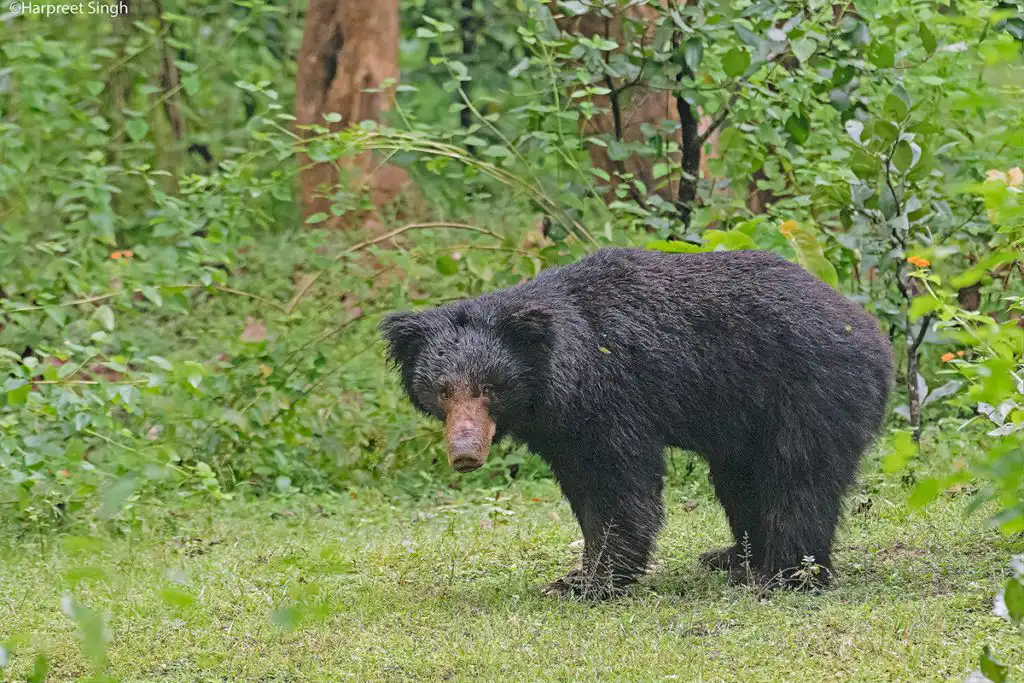
Sloth bears are omnivorous and a large portion of their diet includes insects and termites. They have a long light-colored flexible snout, prehensile lips and can easily open and close their nostrils. With their sharp claws they easily destroy ant nests, and termite mounts. Due to absence of incisor teeth they easily suck large chunk of ants and termites using their snout and large tongue.
They are excellent climbers and fond of honey. Their thick hairy coat plays a vital role of protection from getting bitten by insects and bees while foraging. If noticed carefully on safari, one can find claw marks on Arjun (Terminelia arjuna) trees where beehives are mostly nestled. They also feed on mangos, jackfruit, sugarcane, flowers, berries, nuts, larvae and carrion etc.
Sloth Bear Cubs
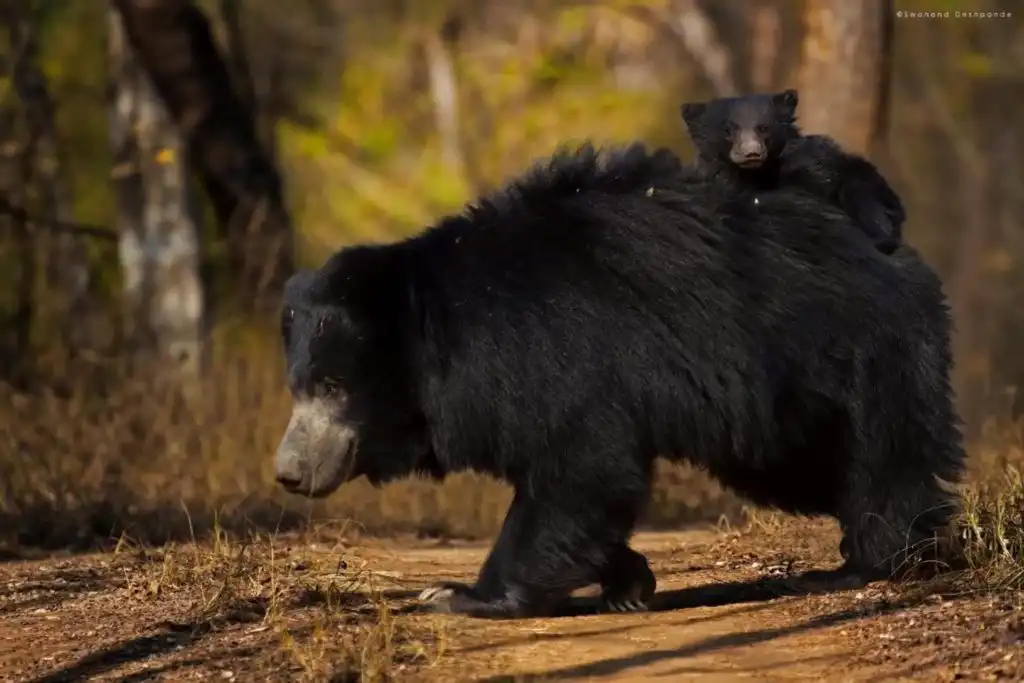
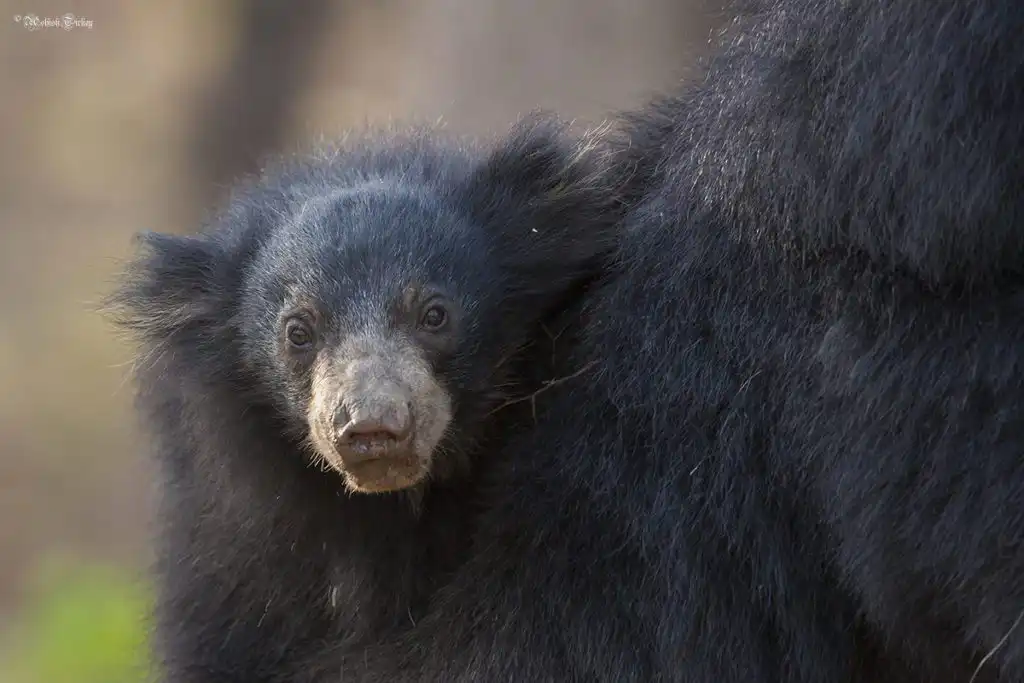
Sloth bears are solitary mammals except while raising young ones. Their gestation period is around six to seven months and the cubs are born mostly in caves, dens, or hollow areas where she feeds them for 2 to 3 months. Initially after two weeks the cubs open their eyes, and by the end of third week they start walking.
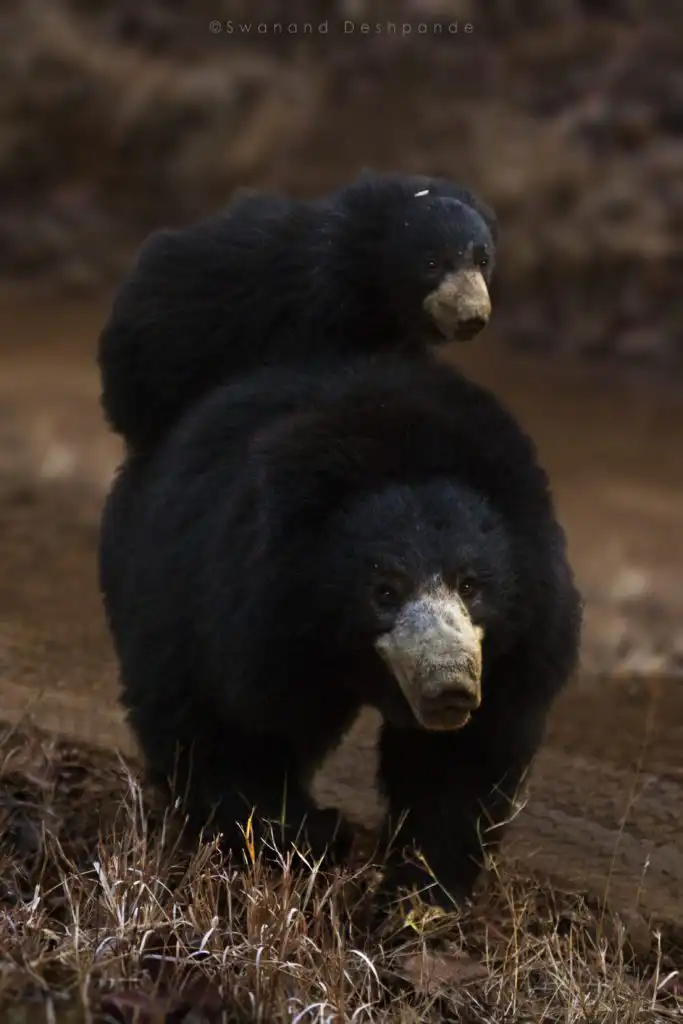
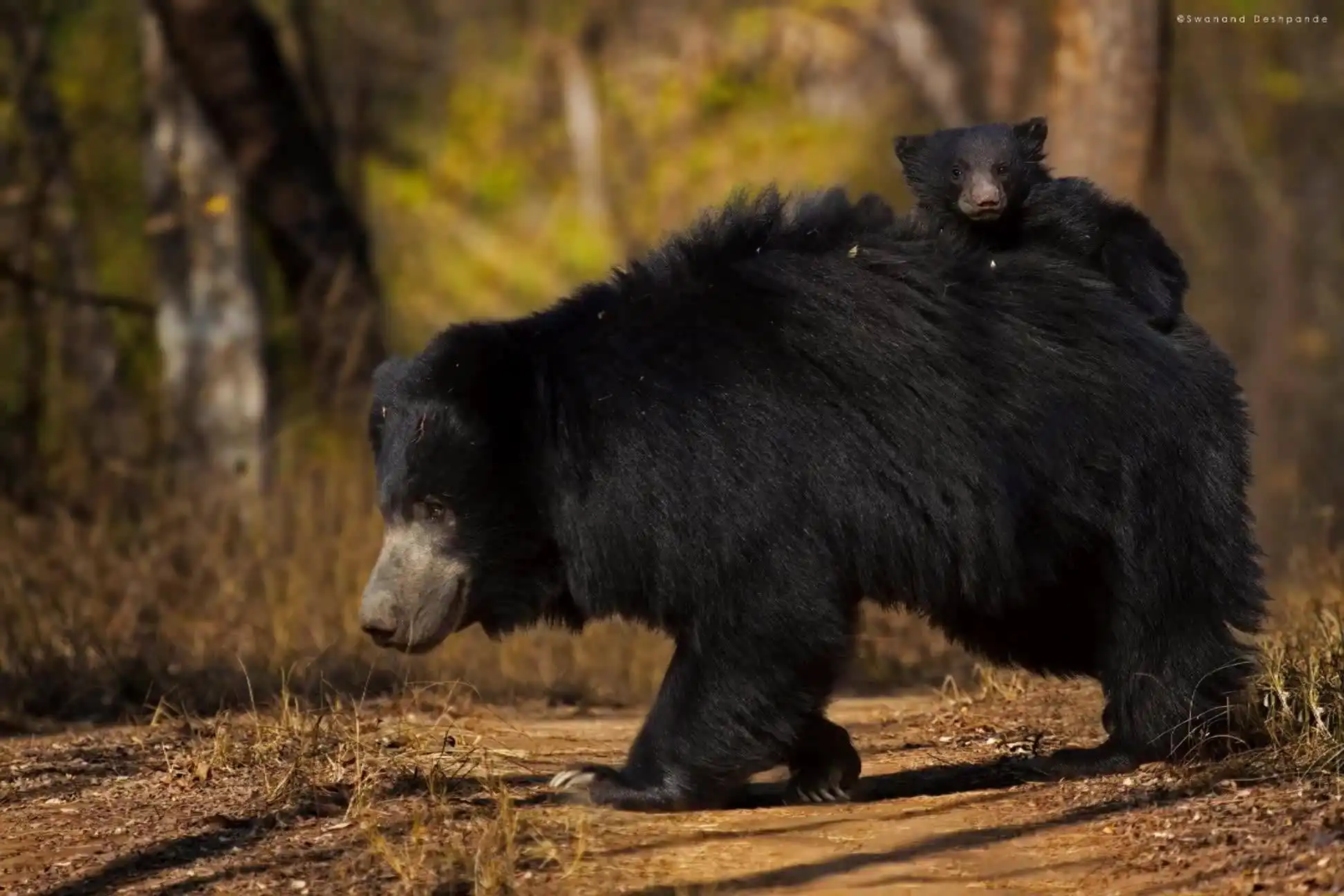
Young ones are carried by the mother on her back, preventing potential threats and even indulging in her daily chores of finding food, walking, running and climbing trees. Her fur provides a tight grip for her cubs to hold firmly and at times bury themselves when in danger. They stay with her for another two to three years and then separate ways from her in a new realm. Mostly 2 cubs are born and taught the nuances of climbing trees and searching for food the way mother does.
Sloth bear facts
- There are four species of bears found in India. The Asiatic black bear, Himalayan Brown bear, Sun bear and the most commonly found Sloth bear.
- Sloth bears are nocturnal animals. During day they sleep in dens, caves and cooler areas of river banks
- They have a great sense for smell which helps them to find food, but poor hearing and visibility
- They defend themselves by standing tall and use their claws to attack
- While feeding insects, ants and termites they close their nostrils as a barrier.
- They are the only bears that carry their young on their back
Best places to see sloth bears in India

Though sloth bears are widespread the best places to see them are in South Indian national parks including Western Ghats and the dry forest cover of Central India. In the Karnataka we have the famed Daroji Sloth Bear sanctuary, for best views along with sightings in other national parks like, Bandipur, Nargarhole, BRT, Anshi, Kudremukh, Madumalai etc.
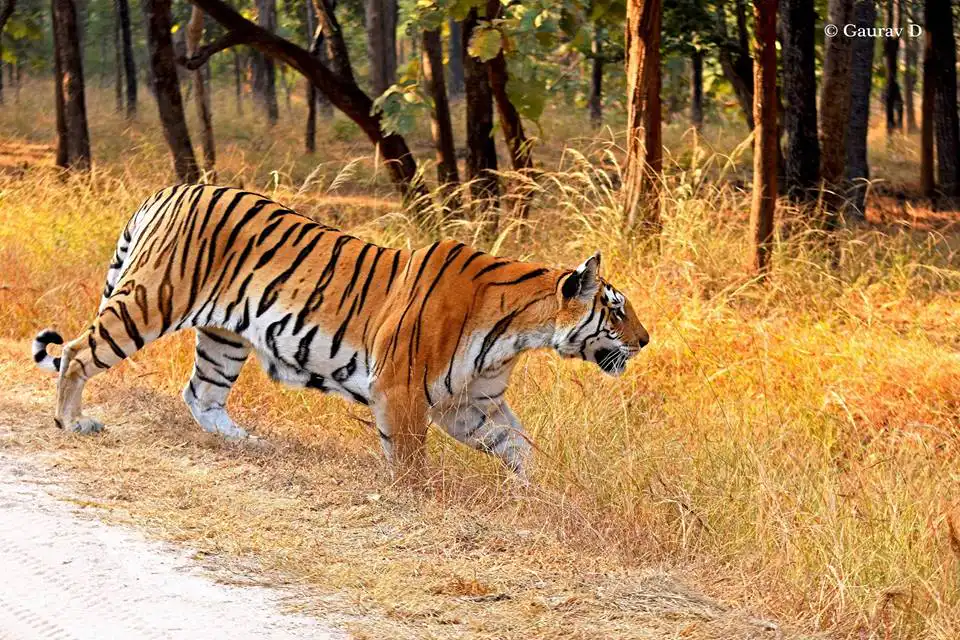
They co-exist with the big cats in their natural habitat in Central India and national parks like Tadoba, Pench (where Rudyard kipling was inspired to write Jungle Book), Kanha, Bandhavgarh, and Panna.
For best sightings stay at Pugdundee Safaris charming Denwa Backwater Escape, in Satpura National park with maximum chances of sightings.
Contributed By: Ashish Tirkey, Manager, Tree House Hideaway, BandhvgarhBandhavgarh
Photo Credits: Ashish Tirkey, and our Team at Denwa Backwater Escape, Satpura
Visit our lodges in Kanha, Bandhavgarh, Pench, Satpura and Panna to watch the sloth bears and other fascinating species frolic in the wild. Get in touch with our trip curators at Pugdundee Safaris to book your next wildlife holiday.
Our trip curators at Pugdundee Safaris are more than happy to assist you. Phone: +91-011-40132680 Email: enquiry@pugdundeesafaris.com

Pugdundee Safaris is recognized as one of India’s leading responsible safari companies. With seven intimate jungle lodges in Central India and many bespoke wilderness experiences it presents the very best of the Indian subcontinent wildlife & hospitality. Between 2009 and 2026, we have been awarded for our excellence in wildlife safaris, our commitment to sustainability, our experienced naturalists and our pioneering mobile safari initiative. Pugdundee is a Hindi word meaning a foot trail commonly used by humans and animals, this word is popularly used for such beaten paths in the Indian jungles. We continuously strive to deliver the best possible guest experience, while still integrating the conservation of jungles and the people living around. We are motivated by the hope of reaching out to people in the remotest areas of our country, as we believe that they are the front-runners of wildlife conservation. However, maybe just a drop in the ocean we consider that we are making a significant contribution to wildlife conservation and rural economy wherever our lodges are.