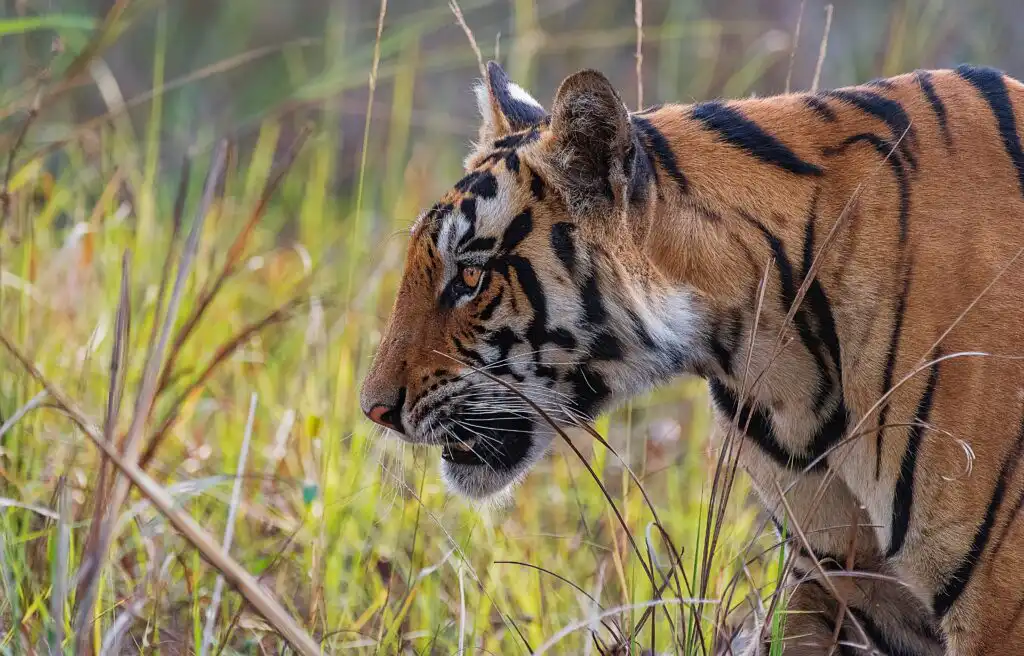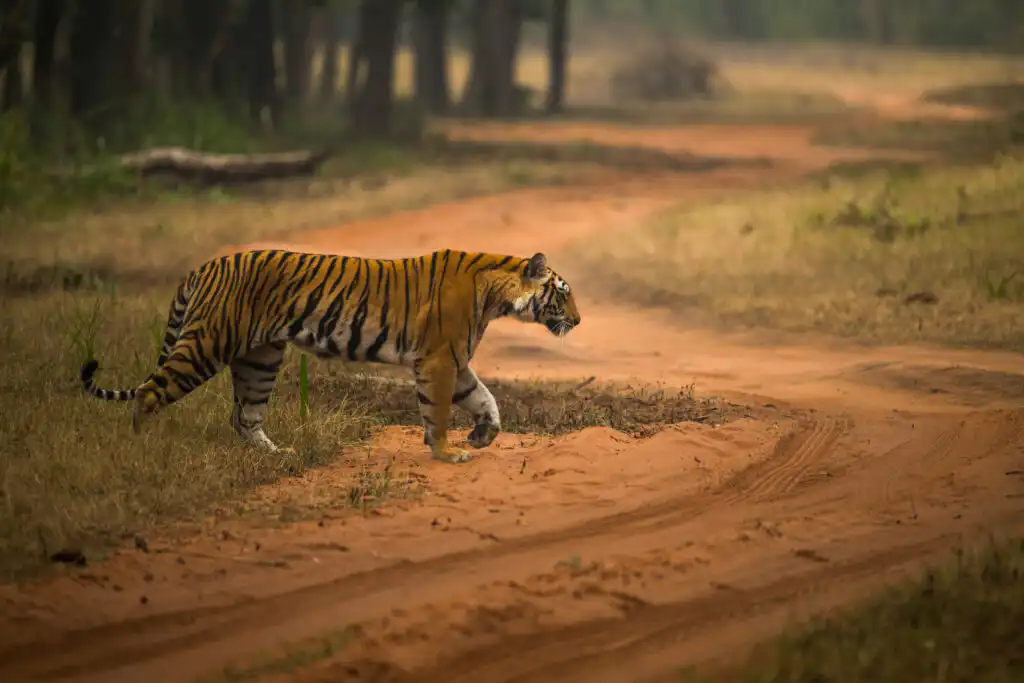
Tigers — the charismatic beasts of the wild. Weighing between to 200-250 kilograms, these magnificent predators are the largest of all extant cats and stand as a symbol of strength, beauty and power.
But every mighty tiger begins its life in a surprisingly fragile state. From these tiny beginnings, they embark on an incredible journey of growth, development and learning of remarkable skills to survive in their wild world.
In this blog, we’ll explore the fascinating life cycle of tigers and discover how these vulnerable cubs transform into majestic hunters going on to rule the Indian jungles.
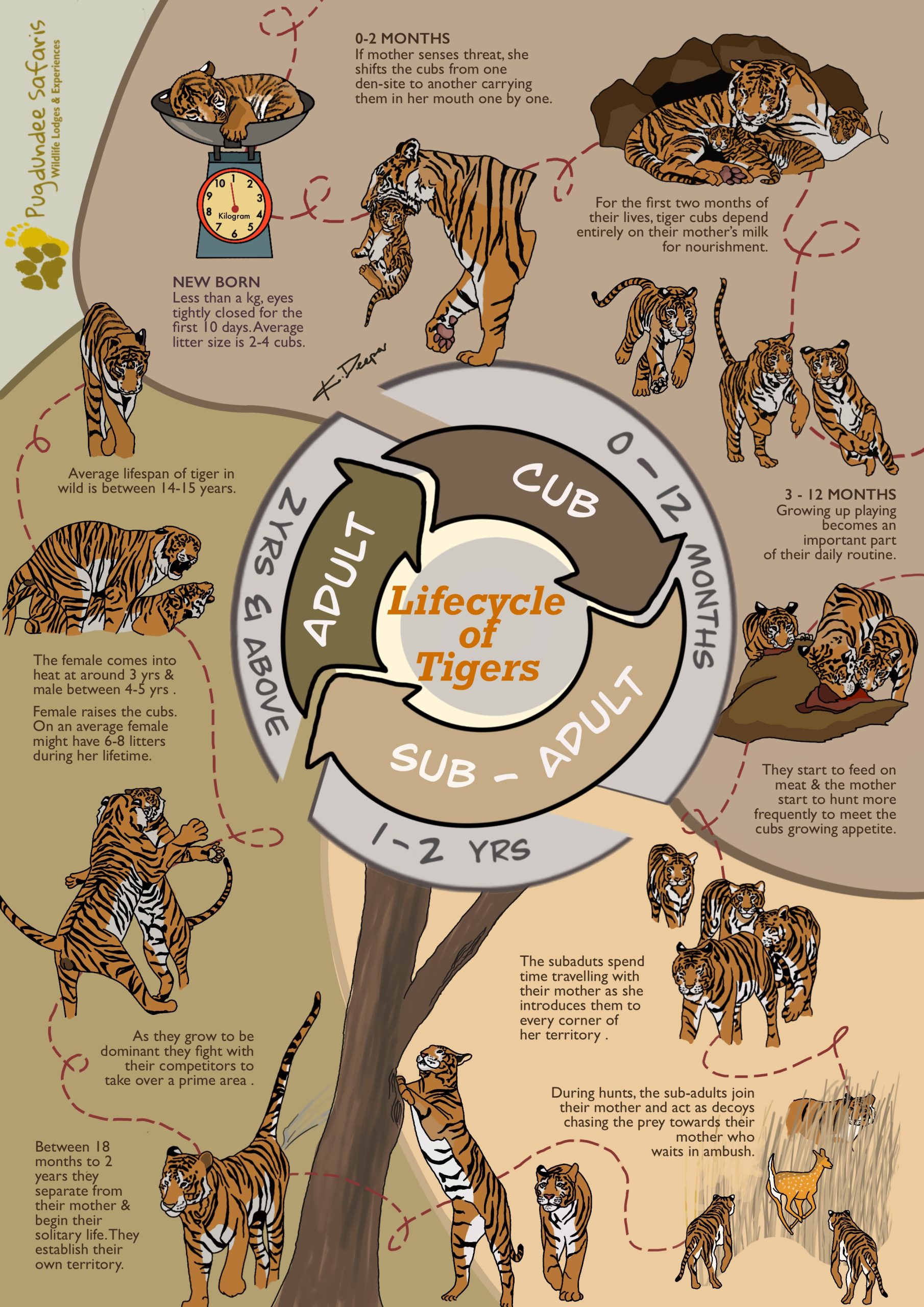
Tigers lifecycle can be divided into three main stages CUB, SUBADULT and ADULT. A tigress gives birth after a gestation period of 105 days (approx).
1.CUB STAGE
a) BIRTH OF A TIGER – NEW BORN CUB
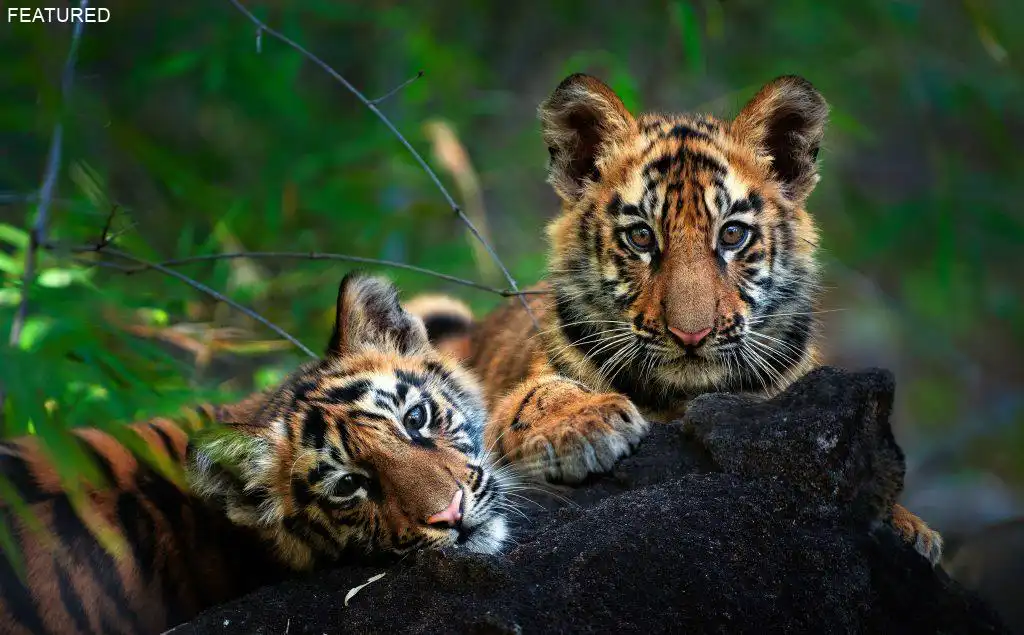
Less than a kilogram in weight, eyes tightly closed, the black stripes that help them camouflage barely appearing, these helpless new born tiger cubs remain hidden away from the outside world in a carefully chosen den, rarely seeing daylight during their earliest days.
Completely unaware of the dangers that surrounds them, these tiny predators are entirely dependent on their mother for warmth, nourishment, and protection.
For the first 6 to 14 days, their eyes remain closed, and they communicate through soft whimpers and squeaks, especially when they feel threatened. Even after 2 weeks when their eyes are open, their vision still remains poorly developed, and it can take up to six more weeks before they are able to see anything clearly.
During this critical stage, the mother stays close to her cubs, leaving the den only occasionally and for short periods, ensuring that her young remain safe and well protected as they begin their journey into the wild.


b) LESS THAN 2 MONTHS:
For the first two months of their lives, tiger cubs depend entirely on their mother’s milk for nourishment. During this time since the mother has to constantly nurse and protect her offspring, she restricts her movements and her home range may shrink to only a small fraction of its usual size.
c) 3 MONTHS AND ABOVE:
The cubs stop staying in their dens and start venturing out during the day but only when their mother is around. They begin to learn the language of the jungle, including recognizing alarm calls and warning signals that indicate the presence of predators or potential threats. Instinctively, the cubs know when to stay hidden and retreat to safety.
Playing becomes a large part of their daily routine, play develops strength, coordination and it occupies lot of time, this would later help them with their hunting skills- stalking, ambushing, charging etc . They play for 1/3rd of the day and sleep for another 3rd of the day. Rest of the time they eat.
At this stage the mother introduces them meat. She takes the prey to the cubs if it’s small or leads them to the kill in case of a bigger prey, tears open the prey for them helping them with ready meat. They grow fast adding on a kilo each week.

d) 5-9 MONTHS OLD:
As the cubs grow their appetite for meat increases. They rely increasingly on prey brought down by their mother. As a result, the mother tiger hunts more frequently, especially when raising a litter of four cubs, which is an average litter size.
As they grow they start accompanying their mother on hunting expeditions, taking their first steps toward becoming skilled predators. From a distance, they closely observe her stalking, ambushing and waiting for right moment to catch the prey.
While the mother continues to make the kill, she increasingly allows the cubs to interact with the carcass, giving them opportunities to learn how to tear it open and access the meat within. They also begin practicing the important habit of plucking or scraping away fur before feeding.


e) 9-12 MONTHS OLD :
The cubs begin to make tentative attempts to hunt smaller prey on their own.
The tigress starts spending longer periods away from her cubs—sometimes even an entire day. One of the most fascinating instinctive behaviours displayed by cubs especially when their mother is away is that they often urinate in pools of water around the denning area, as the water helps conceal their scent hence reducing the chances of predators or rival tigers detecting their presence.
A cub of this age can consume around 2 kilograms of meat in a single sitting.
An average success rate of a tiger hunt is one out of every ten attempts, a mother raising cubs must be far more successful thus the successful survival of the cubs is entirely on their mother’s ability to hunt successfully.

2. SUB ADULT STAGE
a) 12 MONTHS AND ABOVE :
As subadults weighing between 60 – 90 kgs , their play start to include mock hunting either with their mother or sibling as target. At this age, cubs spend much of their time travelling with their mother. She gradually introduces them to every corner of her territory—the hidden trails, water bodies, streams, resting sites, and hunting grounds.
Their hunting lessons become more advanced. Rather than delivering a complete kill, the tigress may only partially subdue her prey before allowing her offsprings to take over. Presented with a still-living animal, the young tigers learn to control its movements and bring it down themselves.
b) 15 MONTHS AND ABOVE:
They start growing aggressive to one another especially when there is food. They also practice to fight, a lesson that would help them as adults- females in fighting off unwanted advances and males to fight their challengers. They practice with exact same moves but with their claws closed.
At times during their hunting expeditions the subadults start to act as excellent decoys in distracting the prey’s attention away from their mother hence chasing them towards her till she is within range to pounce.
c) 17 MONTHS AND MORE –
The subadults, especially males grow to almost the same size as their mother and move through the forest with increasing confidence.
At this stage, they are constantly attempt to make their own kills, sometimes hunting alone and at other times working together as siblings. Competition for food becomes more intense as their appetite grow and each one of them seek to establish themselves. Their stalking and ambush techniques improve steadily.
Emboldened by their size and experience, they begin to target larger prey.
d) 20 – 24 MONTHS –
By 20 months of age, the subadults begin venturing out on their own, coming together only occasionally. Their solitary instincts gradually pull them apart, but true independence depends on becoming successful hunters. At this age, the only animals that pose a threat to them is other tigers.


3. ADULT STAGE
a) 2 YEARS AND ABOVE
Their success rate in hunting improves with age. Sometimes they even steal kill from other predators like leopard and also occasionally from jackals .
Female often remain closer to their mother, occasionally associating with her until around 24 months of age, before establishing territories that frequently border or overlap with their mother’s range. They attain sexual maturity at the age of 3 years. They start looking for a mate, constantly growling and scent marking .
Male tigers mature more slowly, typically reaching sexual maturity at around four to five years of age. Until then, they often roam vast distances in search of vacant territory. During this period, young males may occasionally venture into the domains of dominant resident males, risking confrontation. As they grow stronger and gain experience, they become capable of challenging rivals and securing territories of their own. Holding a prime territory is crucial, as areas rich in prey and overlapping with the ranges of several females offer the greatest opportunities for reproduction/thereby passing their genes.

b) OLD AGE AND DEATH –
An average lifespan of wild tiger is about 14 years. As the tiger grows old, their eyesight starts getting poorer, female tigress might even loose their canines owing to a lot of hunting that is involved in raising cubs. Gradually they stop marking and also move into an area where there aren’t much competitors. Sometimes old tigers move to fringes of forest and start lifting cattle from vilages which is a easier meal for them and might end up in conflict with humans. Others survive on smaller prey and eventually they collapse mostly of hunger.
From blind, vulnerable cubs weighing less than a kilogram to powerful apex predators capable of ruling vast stretches of forest, the tiger’s life cycle is a remarkable story of growth, survival, and adaptation.

AUTHOR BIO
Deepa Rakshana, Naturalist at Kanha Earth Lodge, Pugdundee Safaris – An architecture graduate from Chennai, who decided to follow her passion and pursue her dream career dedicated to the wild. After completing the Pronat training program, she began her professional journey in Pench and now currently working as a naturalist in Kanha. She is passionate about connecting people with wildlife and creating meaningful experiences in nature. For her, every day in the jungle is unique, filled with surprises, unforgettable encounters, and magical moments that make her work both exciting and deeply rewarding.