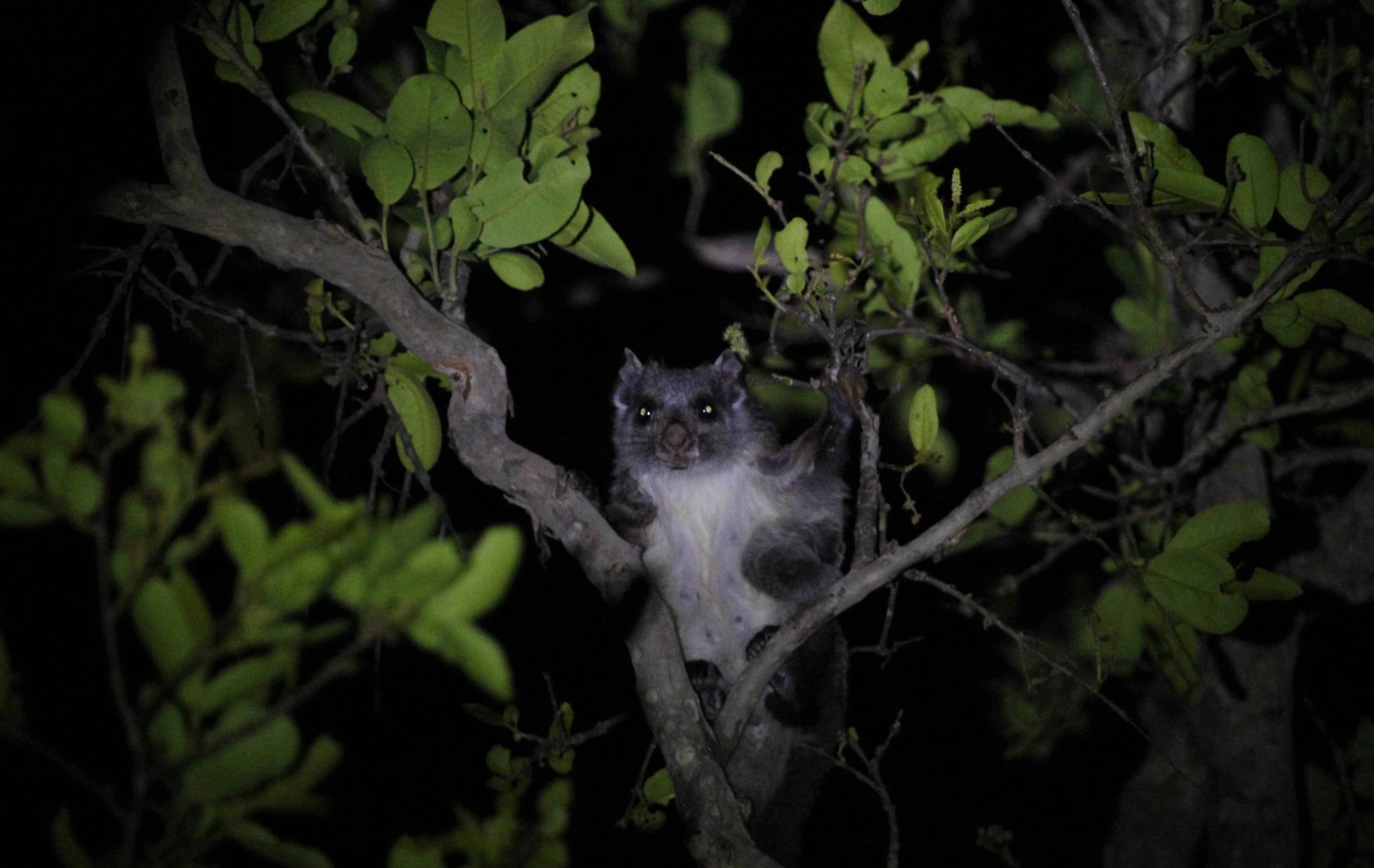
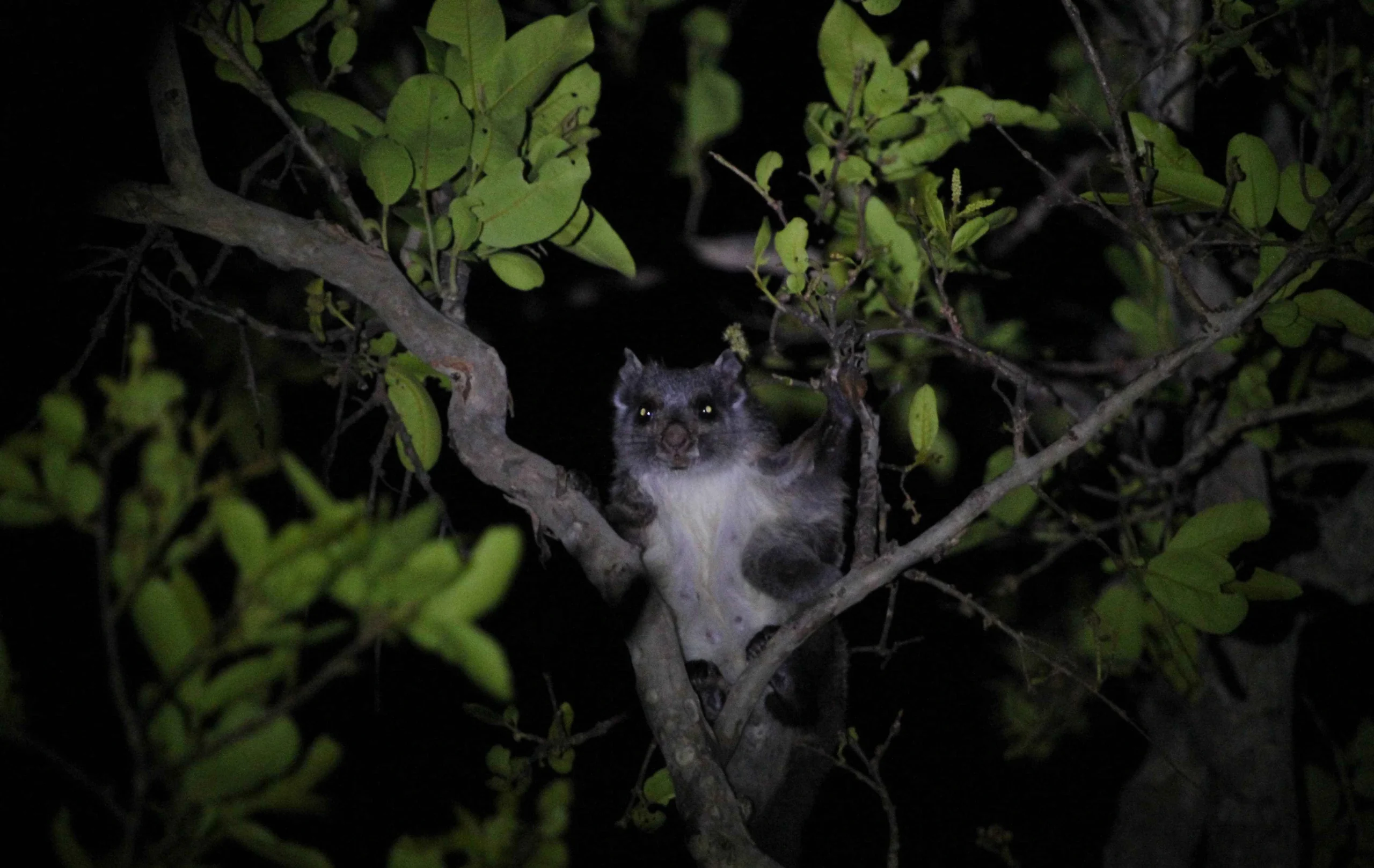
1. Indian Giant Flying Squirrel
Petaurista philippensis
SIZE
One of the largest flying squirrels, with a body length of about 30 – 45 cm and a tail measuring up to 60 cm.
HABITAT
Found in tropical and subtropical forests across central and southern India. Evergreen ,semi-evergreen and deciduous forests frequenting forest edges.
DIET
Primarily feeds on fruits, nuts, leaves, and bark, contributing to seed dispersal.
BEHAVIOUR
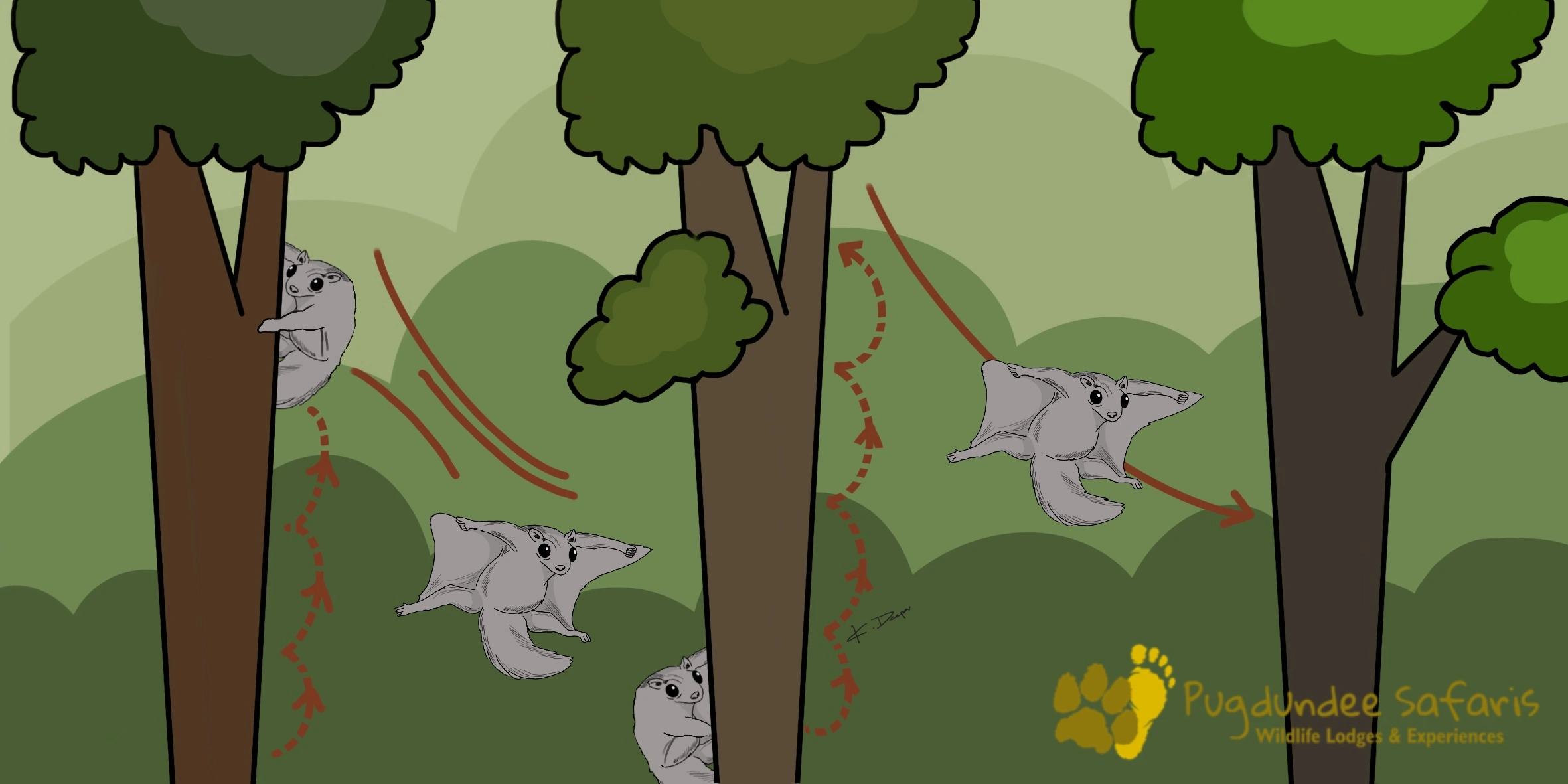
Nocturnal and arboreal, it glides between trees in search of food, covering distances up to 60 meters. Owls have been found to predate on them and they are found giving alarm calls on seeing or hearing owl’s calls.
The Indian Giant Flying Squirrel is widely distributed and plays a significant role in maintaining forest ecosystems, making it a keystone species in its habitat.
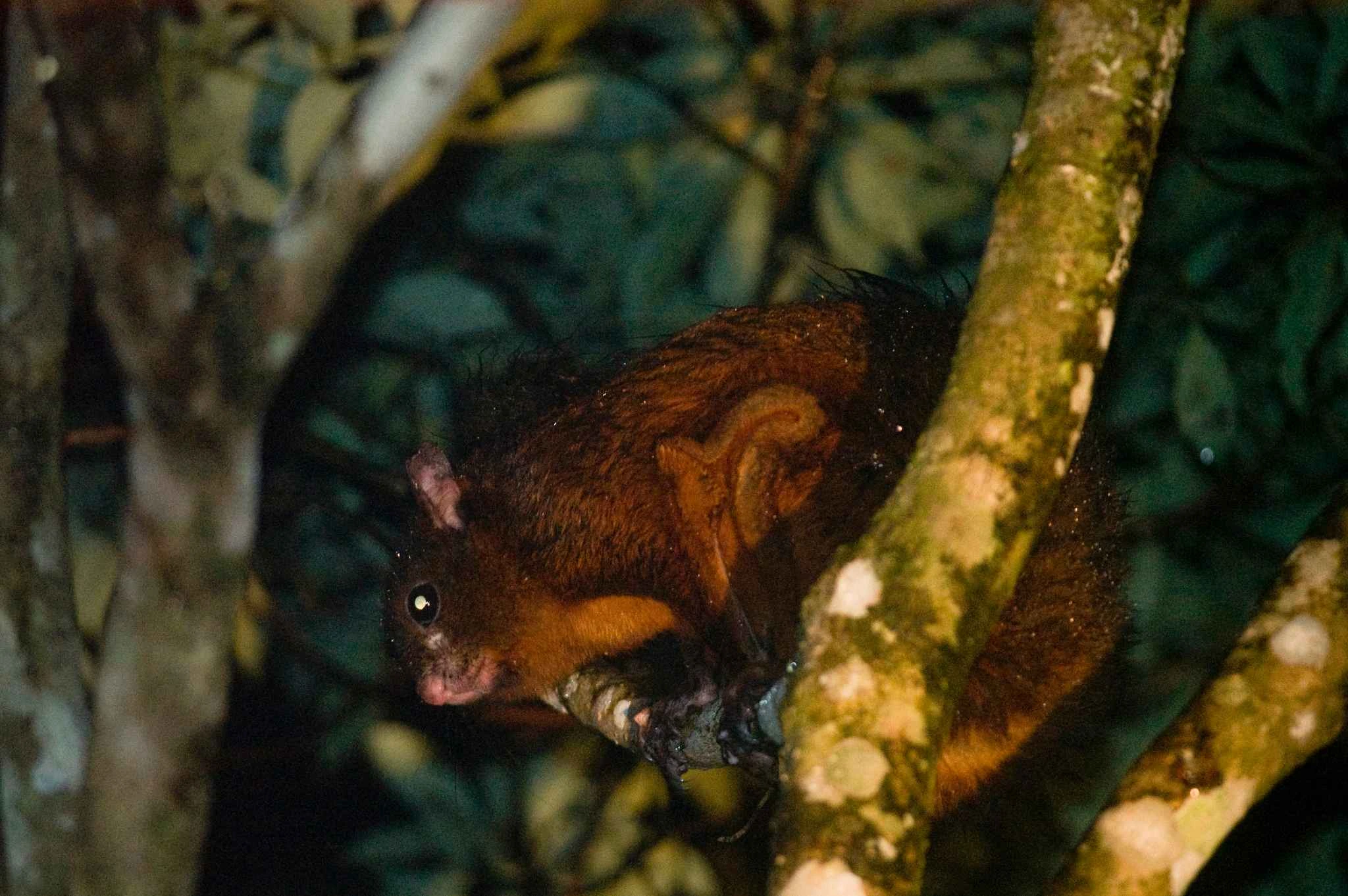
2. Red Giant Flying Squirrel
Petaurista petaurista
SIZE
Body length upto 50 cm and tail 60 cm, with a striking reddish-brown or maroon coat.
HABITAT
Found in north-eastern forests and the Himalayan foothills.
DIET
Fruits, seeds, leaves, and flowers make up the bulk of its diet.
BEHAVIOUR
Known for its long gliding abilities often exceeding 100 meters, making it an efficient traveler of dense canopies.
This species is notable for its vibrant coloration and adaptability to a variety of forest types, including evergreen and deciduous forest.
Also Read – Types of Giant Squirrels Found in India
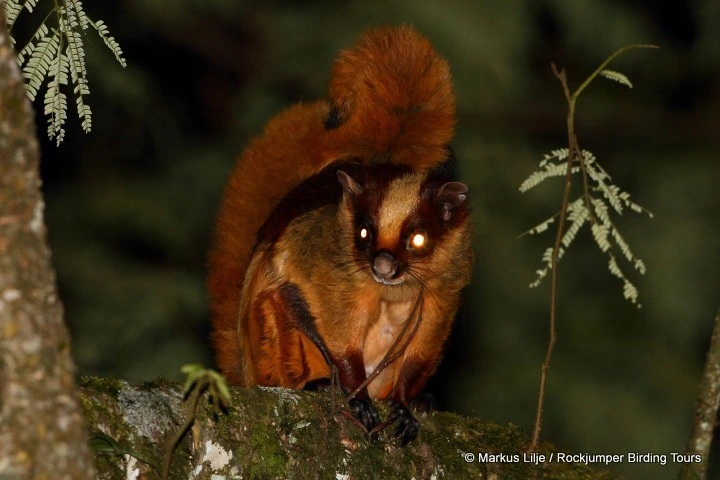
3. Bhutan Giant Flying Squirrel
Petaurista nobilis
SIZE
A large species with a reddish or orange-brown coat and a bushy tail.
HABITAT
Found in the north-eastern regions of India, Bhutan and adjoining Himalayan forests.
DIET
Herbivorous, feeding on fruits, seeds, and leaves.
BEHAVIOUR
Solitary and elusive, Crepuscular and nocturnal in habit, it glides silently through the dense Himalayan forests. In contrast to other arboreal squirrels these are sometimes found on saltlicks in the ground.
Often referred to as Gray’s Giant Flying Squirrel, this species remains poorly studied, and its elusive nature adds to its mystique.
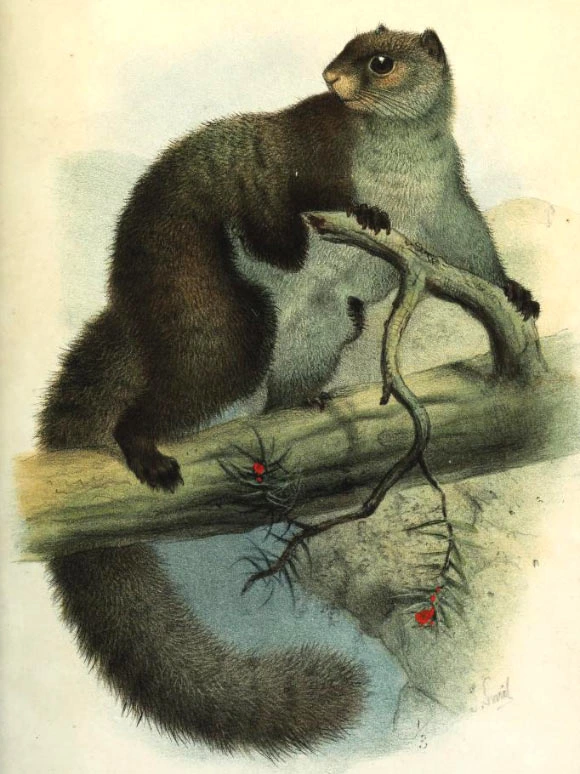
4. Woolly Flying Squirrel
Eupetaurus cinereus
SIZE
One of the largest and rarest flying squirrels, with body length of 45 cm and tail length 60 cm.
HABITAT
Found in the cold, high-altitude coniferous forests of Jammu and Kashmir.
DIET
Feeds primarily on pine needles, making it highly specialized for its habitat.
BEHAVIOUR
Adapted to cold environments, it is nocturnal and highly elusive.
The Woolly Flying Squirrel is considered one of the rarest mammals globally and was thought to be extinct until rediscovered in the 1990s.
5. Kashmir Flying Squirrel
Eoglaucomys fimbriatus
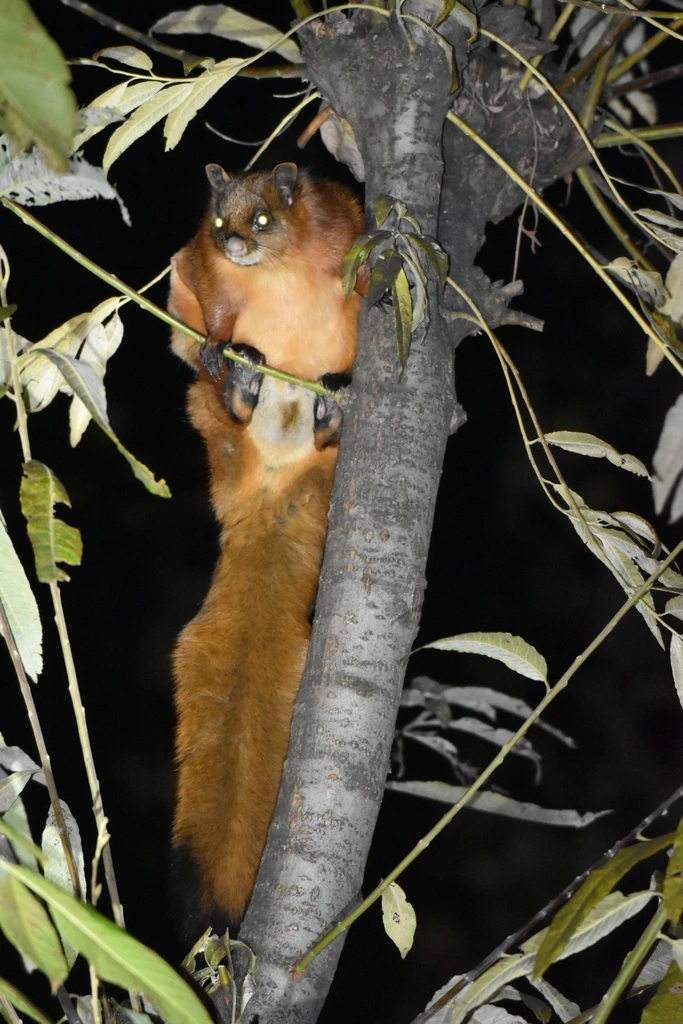
SIZE
Medium-sized, with a body length of about 30 cm and a bushy tail of length 35 cm.
HABITAT
Found in the Himalayan forests of Jammu and Kashmir, often at lower altitudes compared to the Woolly Flying Squirrel.
DIET
Omnivorous, feeding on fruits, nuts, insects, and leaves.
BEHAVIOUR
Prefers dense tree canopies and uses its gliding ability to evade predators.
The Kashmir Flying Squirrel plays an important role in seed dispersal in its habitat, helping maintain forest diversity.
6. Travancore Flying Squirrel
Petinomys fuscocapillus
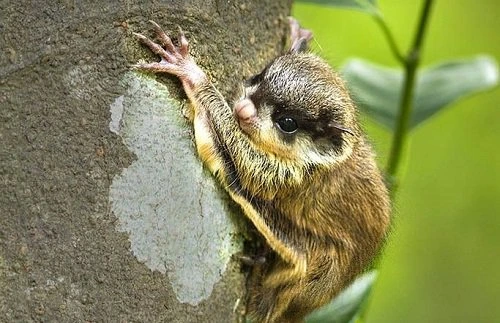
SIZE
Smaller than most giant flying squirrels, with a length of about 25–30 cm.
HABITAT
Restricted to the evergreen forests of the Western Ghats.
DIET
Fruits, seeds, and flowers are its primary food sources.
BEHAVIOUR
Almost entirely a canopy dweller.
Listed as “Data Deficient” due to a lack of comprehensive studies. This species is rare and faces significant threats from deforestation, making it a high-priority species for conservation efforts.
7. Parti-Coloured Flying Squirrel
Hylopetes alboniger
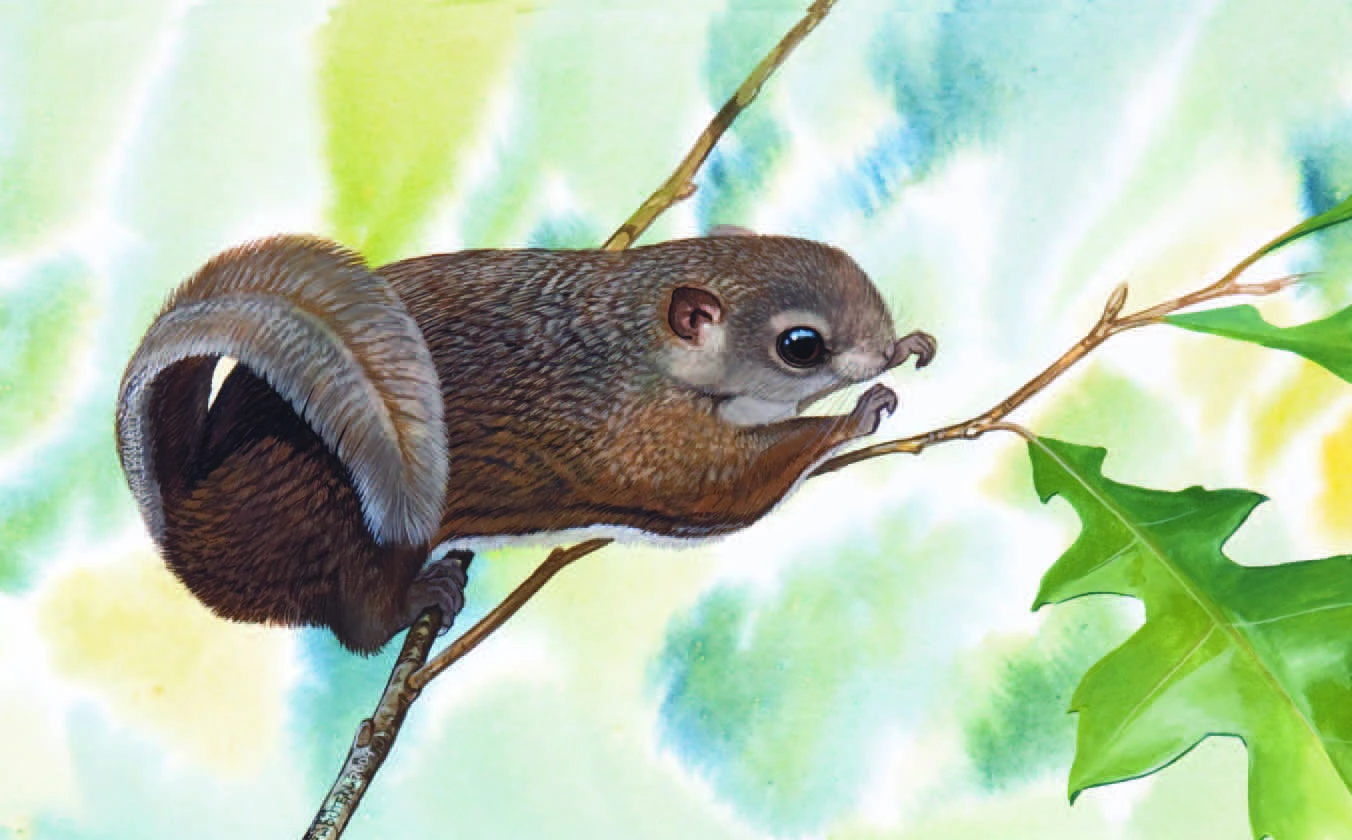
SIZE
A small-to-medium-sized flying squirrel with a striking black-and-white coat.
HABITAT
Found in the north-eastern states, particularly in montane and subtropical forests.
DIET
Primarily frugivorous but may consume insects occasionally.
BEHAVIOUR
Highly agile, it uses its distinctive coloration for camouflage in dense forests.
The Parti-Coloured Flying Squirrel stands out for its vibrant appearance and is often spotted gliding during twilight hours.
Adaptations of Flying Squirrels
All flying squirrels share unique adaptations for gliding:
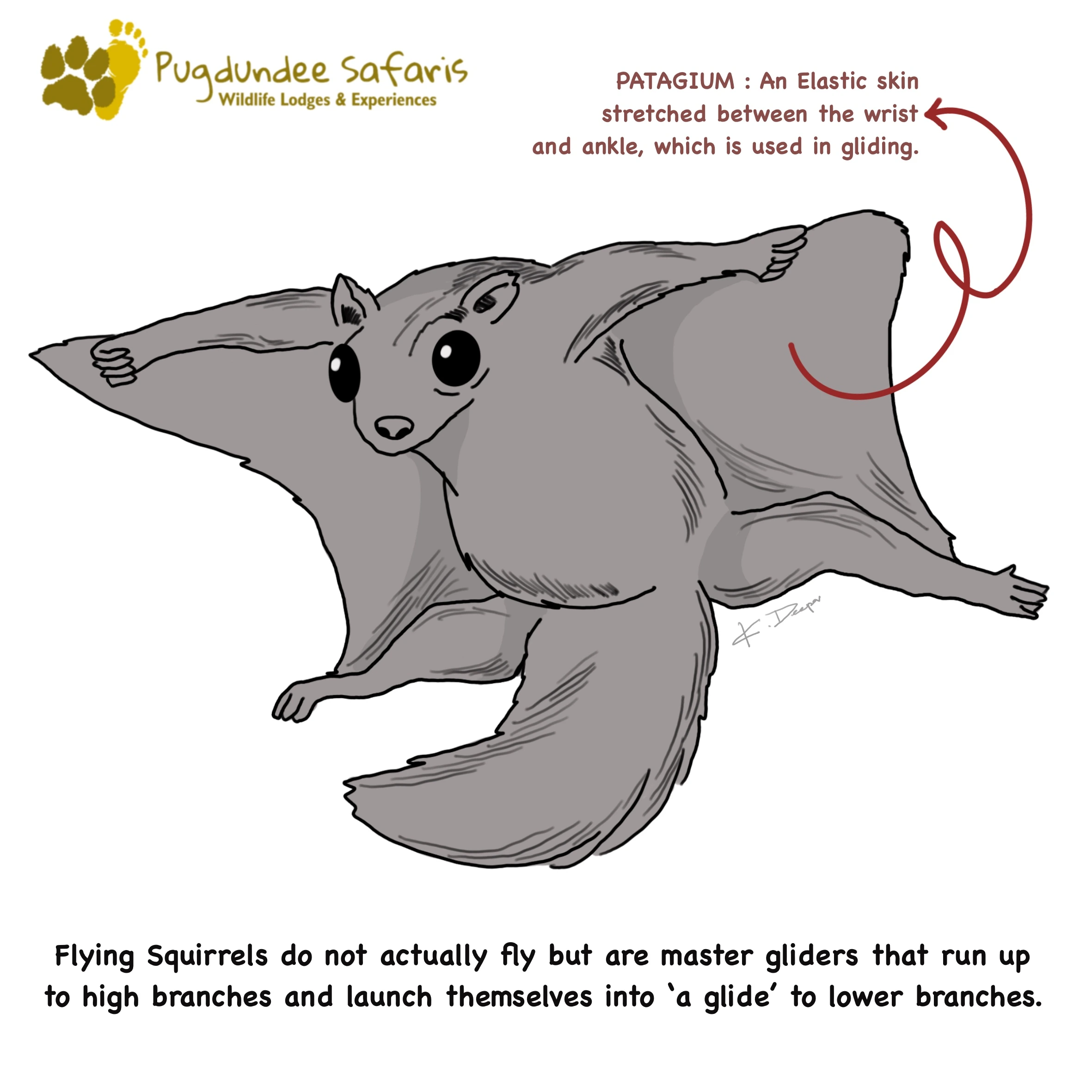
1. PATAGIUM
The gliding membrane that stretches between their limbs, allowing smooth aerial movement.
2. STRONG LIMBS AND SHARP CLAWS
Ideal for climbing and gripping tree bark.
3. BUSHY TAILS
Act as rudders, aiding in navigation and balance during glides.
4. LARGE EYES
Provide excellent night vision for their nocturnal activities.
Threats and Conservation OF FLYING SQUIRRELS
Flying squirrels face numerous challenges, including:
1. HABITAT LOSS
Deforestation and fragmentation of forests due to agriculture and urbanization.
2. HUNTING
In some regions, they are hunted for their meat and fur.
3. CLIMATE CHANGE
Altered weather patterns affect their habitats and food availability.
Conservation measures like habitat restoration, research, and awareness programs are vital for their survival.
Written by Vishal Sharma, Naturalist at Pugdundee Safaris.