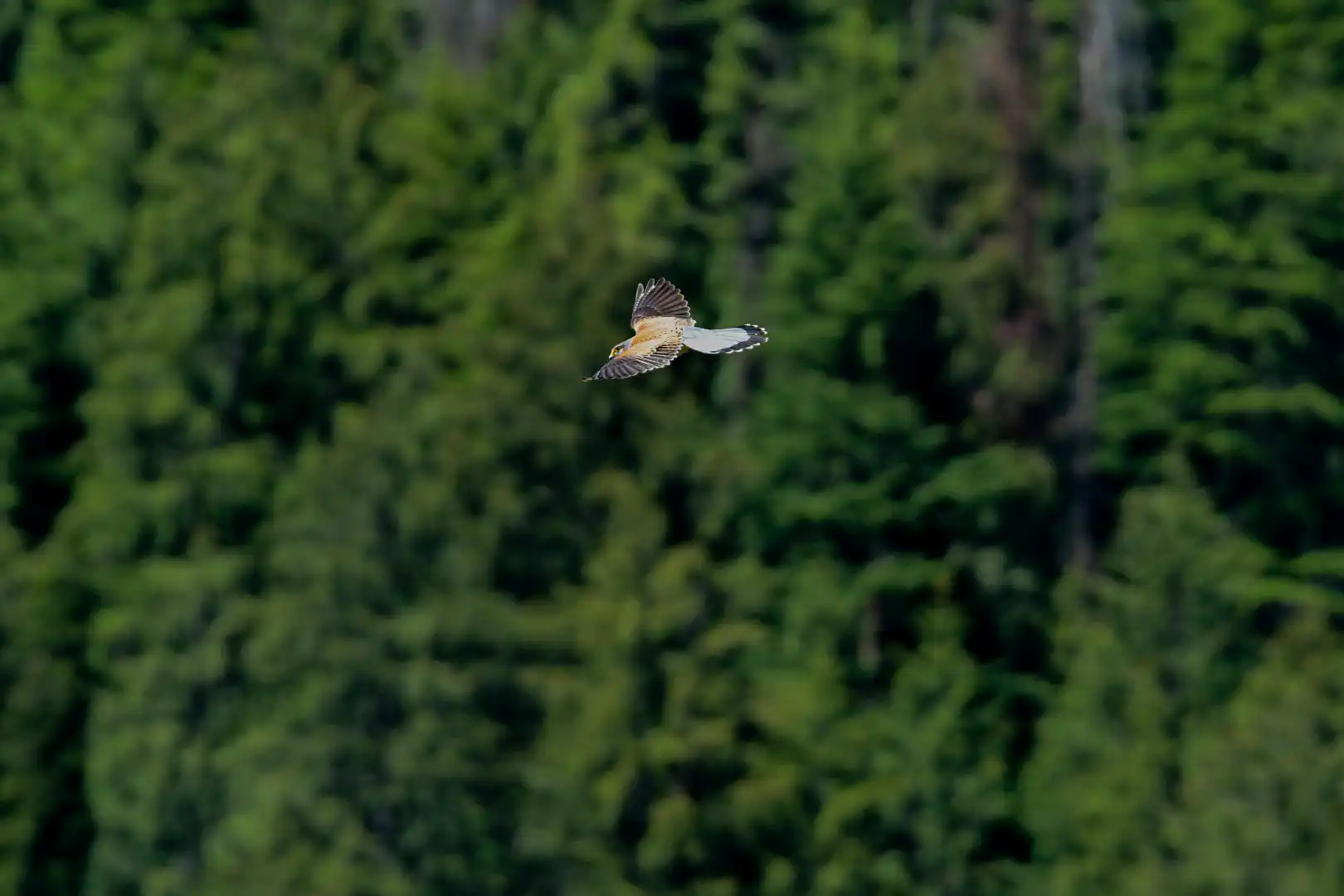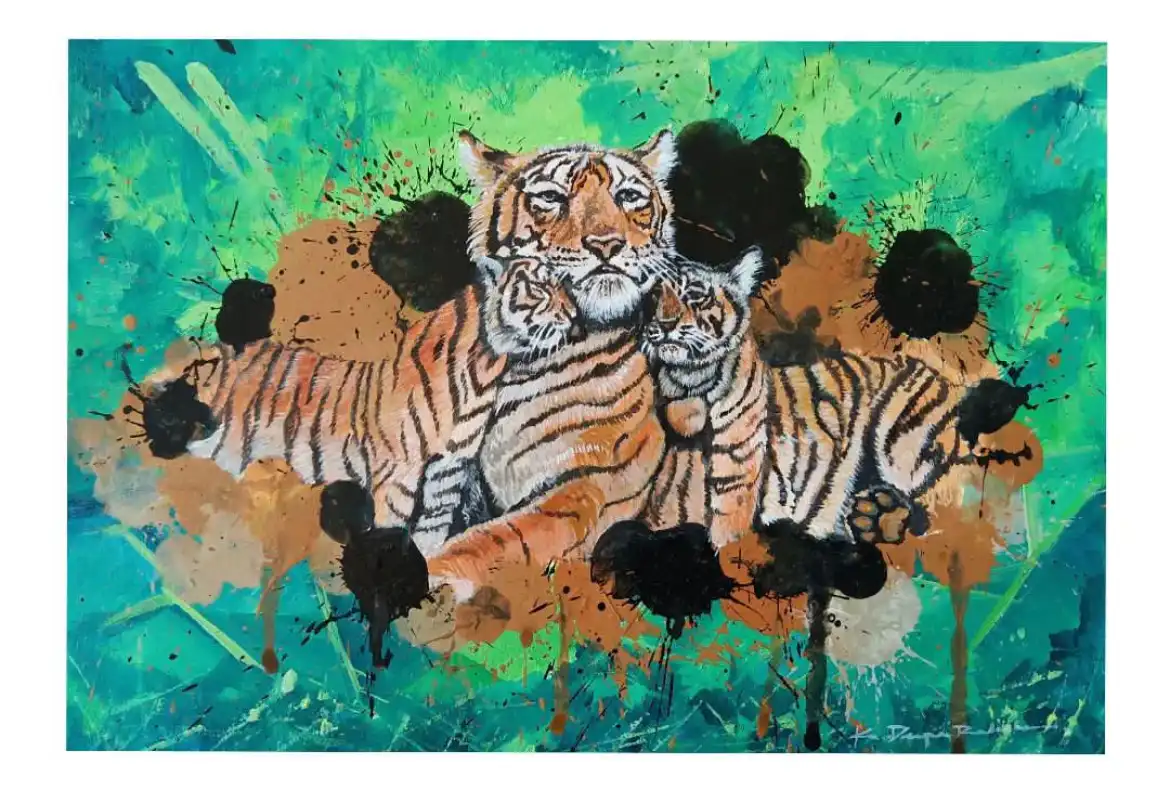
Tiger is known to have fascinated wildlife lovers & conservationists for multiple reasons. The fact that this mighty cat has been given the status of national animal, explains our love for the specie. Here we are making an attempt to describe the beautiful creature through a poetic description of the tiger.
The day has dawned in Kanha meadows,
A roar of the royal rises from the shadows.
From where she is, to where she would go,
Kanha is the Tigress’ jungle we know!
Firm in her walk, she sniffs the breeze
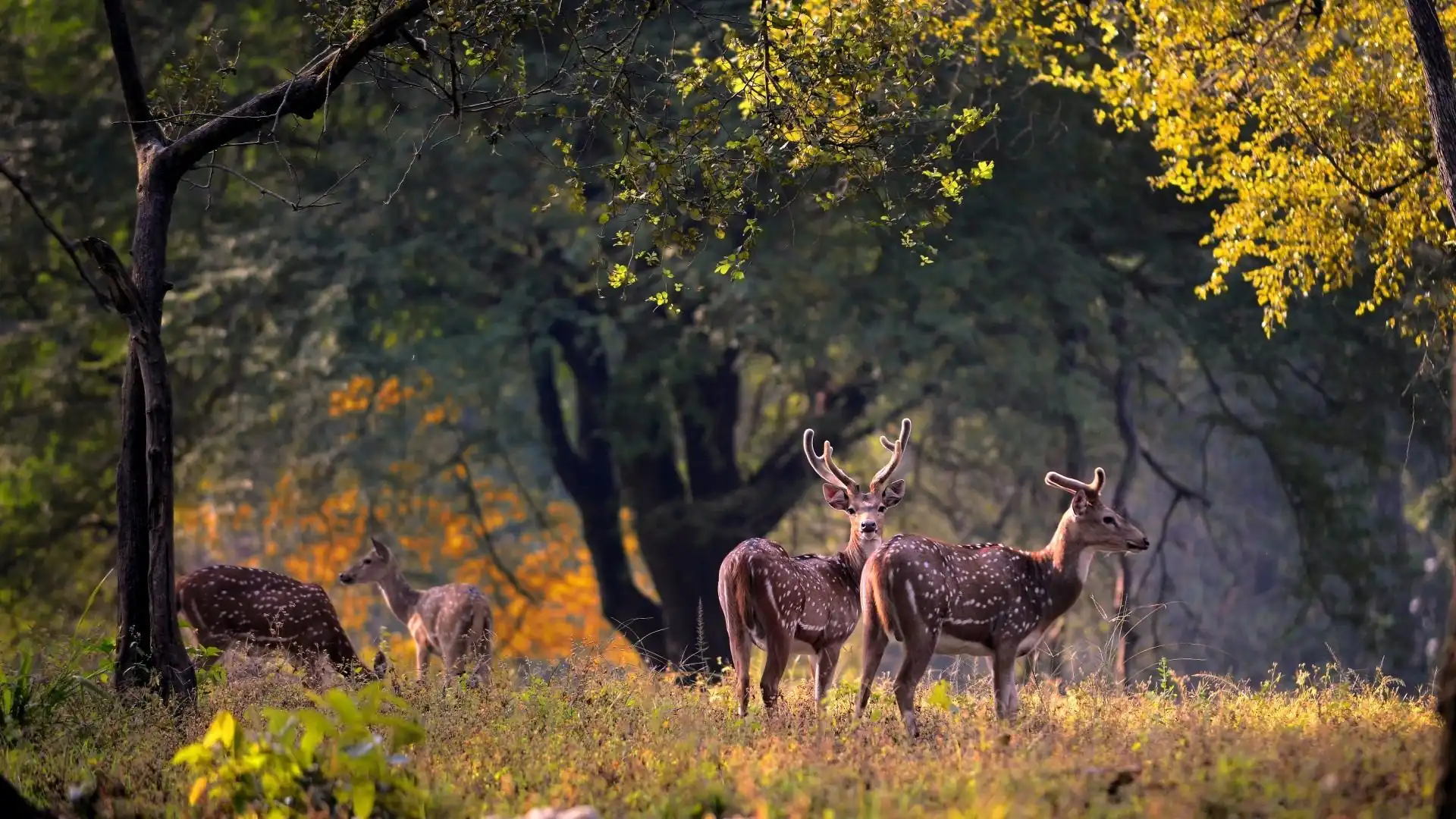
and crouches in the grassland to ambush one deer at ease
She waits for the deer to dawdle close,
as she pounced, the herd ran in chaos!
What’s in her catch is dragged into the deep woods
for a peaceful meal in secluse.
Never would she waste any meal,
even though she is the jungle queen!
She then strolled down to the taal,
Finally, revealing her stripes to the human audience.
Lounging under the Mahua shade,
She gazed at the sky and took a yawn.
The langurs are now unassumingly quiet,
and the deer will soon return to graze.
The mighty Tigress winks at me with her big, sleepy eyes
and then swiftly rolls to the other side.
The tiger (Panthera tigris) is the largest living cat species and a member of the genus Panthera native to Asia. It has a powerful, muscular body with a large head and paws, a long tail, and distinctive black, mostly vertical stripes on orange fur. It was first scientifically described in 1758 and is traditionally classified into eight recent subspecies, though some recognize only two subspecies, namely mainland Asian tigers and island tigers of the Sunda Islands.

The tiger has been listed as Endangered on the IUCN Red List since 1986, as the global tiger population is thought to have continuously declined from an estimated population of 5,000–8,262 tigers in the late 1990s to 3,726–5,578 individuals estimated as of 2022 During 2001–2020, landscapes where tigers live declined from 1,025,488 km2 (395,943 sq mi) to 911,901 km2 (352,087 sq mi). Habitat destruction, habitat fragmentation , and poaching for fur and body parts are the major threats that contributed to the decrease of tiger populations in all range countries.
Contributed by : Vineeta Yadav

Pugdundee Safaris is recognized as one of India’s leading responsible safari companies. With seven intimate jungle lodges in Central India and many bespoke wilderness experiences it presents the very best of the Indian subcontinent wildlife & hospitality. Between 2009 and 2026, we have been awarded for our excellence in wildlife safaris, our commitment to sustainability, our experienced naturalists and our pioneering mobile safari initiative. Pugdundee is a Hindi word meaning a foot trail commonly used by humans and animals, this word is popularly used for such beaten paths in the Indian jungles. We continuously strive to deliver the best possible guest experience, while still integrating the conservation of jungles and the people living around. We are motivated by the hope of reaching out to people in the remotest areas of our country, as we believe that they are the front-runners of wildlife conservation. However, maybe just a drop in the ocean we consider that we are making a significant contribution to wildlife conservation and rural economy wherever our lodges are.